The state has changed a long-standing rule that had effectively blocked new nuclear construction, and a new task force will now study financing, regulation, workforce needs, and public trust around future projects.
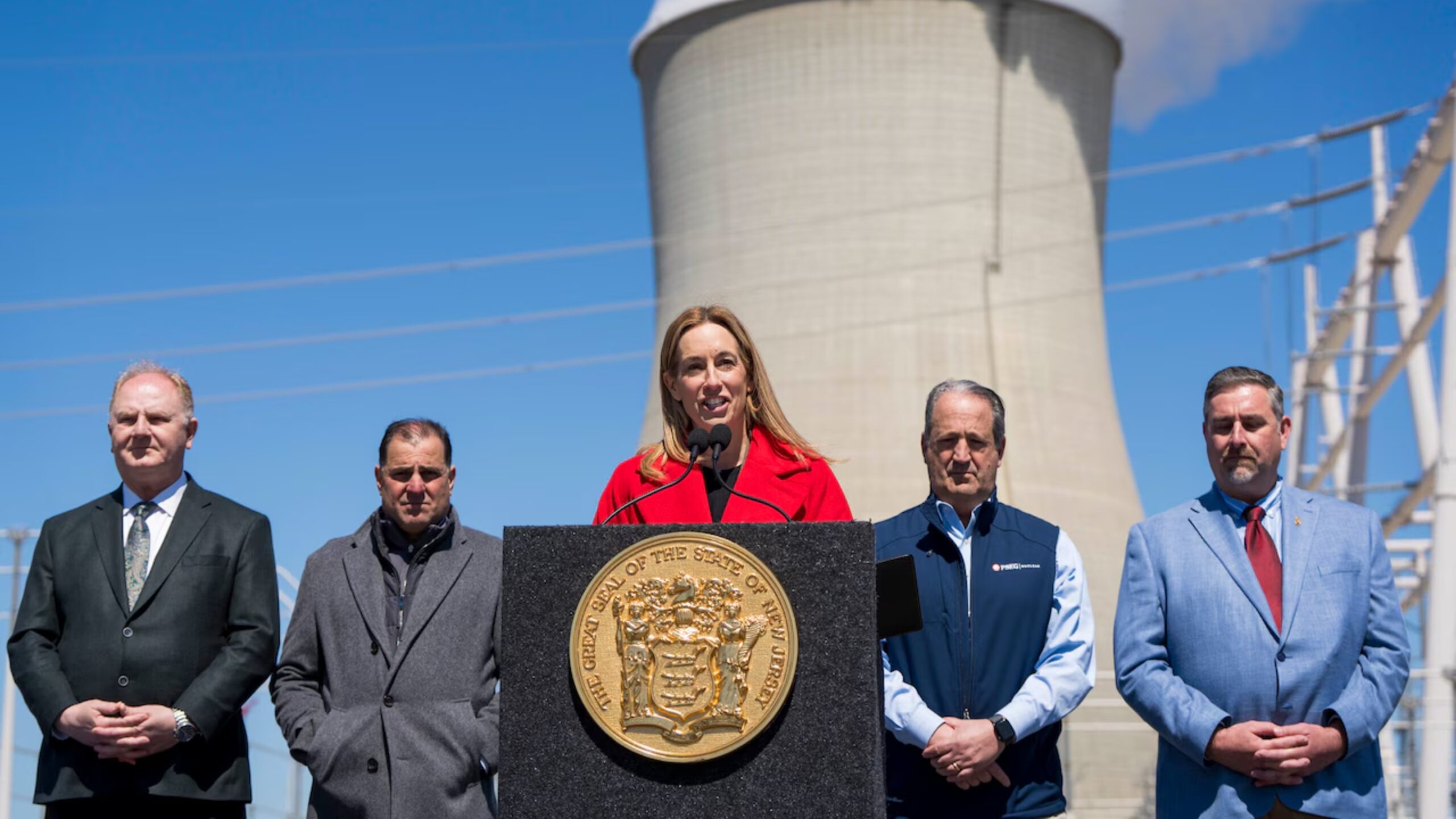
MORRISTOWN, NJ – Gov. Mikie Sherrill on April 8 signed S3870/A4528, a bill that changes how New Jersey reviews permits for new nuclear power facilities and removes what state officials and lawmakers had described as a de facto moratorium on new projects. The signing also advanced the state’s Nuclear Task Force, which is now charged with planning for possible future nuclear development in New Jersey.
The law revises the Coastal Area Facility Review Act, or CAFRA. Under the new standard, the Department of Environmental Protection commissioner may approve a nuclear facility if its method for storing or disposing of radioactive waste is safe, meets Nuclear Regulatory Commission standards, and protects life and the environment. Legislative materials say the prior framework had become an artificial barrier because it hinged on a permanent high-level waste solution that does not exist, effectively preventing new nuclear permits from moving forward.
The measure moved through Trenton with broad support, passing 38-0 in the Senate and 68-0-3 in the Assembly. The governor’s office said the signing took place after a tour of the Salem Nuclear Power Plant and noted that Salem and Hope Creek together produce more than 40 percent of New Jersey’s electricity and roughly 80 percent of its pollution-free power.
The policy shift is tied to a larger affordability and reliability push. On January 20, Sherrill issued Executive Order No. 2, which declared a state of emergency over utility costs, cited more than $2 billion in new costs to New Jersey families and businesses from each of two recent PJM capacity auctions, and created the interagency Nuclear Power Task Force as part of a broader effort to expand in-state power generation. That same order also pushed state agencies to accelerate solar, battery storage, and other generation projects.
According to the governor’s office, the task force will organize its work around five areas: financing, supply chains and technology development, workforce growth and training, regulatory and permitting framework, and public trust and confidence. Its initial members include officials from the Board of Public Utilities, DEP, Treasury, and the Economic Development Authority, along with representatives from PSEG Nuclear, Holtec, labor groups, and the Natural Resources Defense Council.
What the new law does not do is approve a specific reactor project or set a construction timeline. NBC10 Philadelphia reported that Sherrill described the change as a first step in a long-term strategy and said new plants would take time, meaning the immediate result is a legal and policy change rather than a shovel-ready project.
For Morristown-area readers, the short-term impact is indirect but significant. The law will not lower electric bills overnight, and it does not mean a new plant is about to be built. What it does is remove one legal barrier to future nuclear proposals and place nuclear energy more firmly inside New Jersey’s long-term strategy for adding power supply, addressing grid strain, and trying to contain electricity costs. Any actual project would still require additional permitting, financing, and public scrutiny before construction could begin.
It will take almost a decade to build and maintain a new nuclear power plant..
Nuclear power plants were outlawed by the Democratic governors in the state of NJ & NY. It isn’t easy to restart nuclear power plants or build new ones.