The World Cup is coming to New Jersey with promises of economic upside and global attention, but for residents the bigger questions are more practical: what happens to commuting, costs, public services, and daily life when eight matches hit the Meadowlands?
The World Cup is coming to New Jersey, but for most residents the event will not only arrive as a celebration. It will arrive as a transportation challenge, a public-services challenge, a cost question, and a test of whether state and local leaders can host a global spectacle without making ordinary life harder than it needs to be.
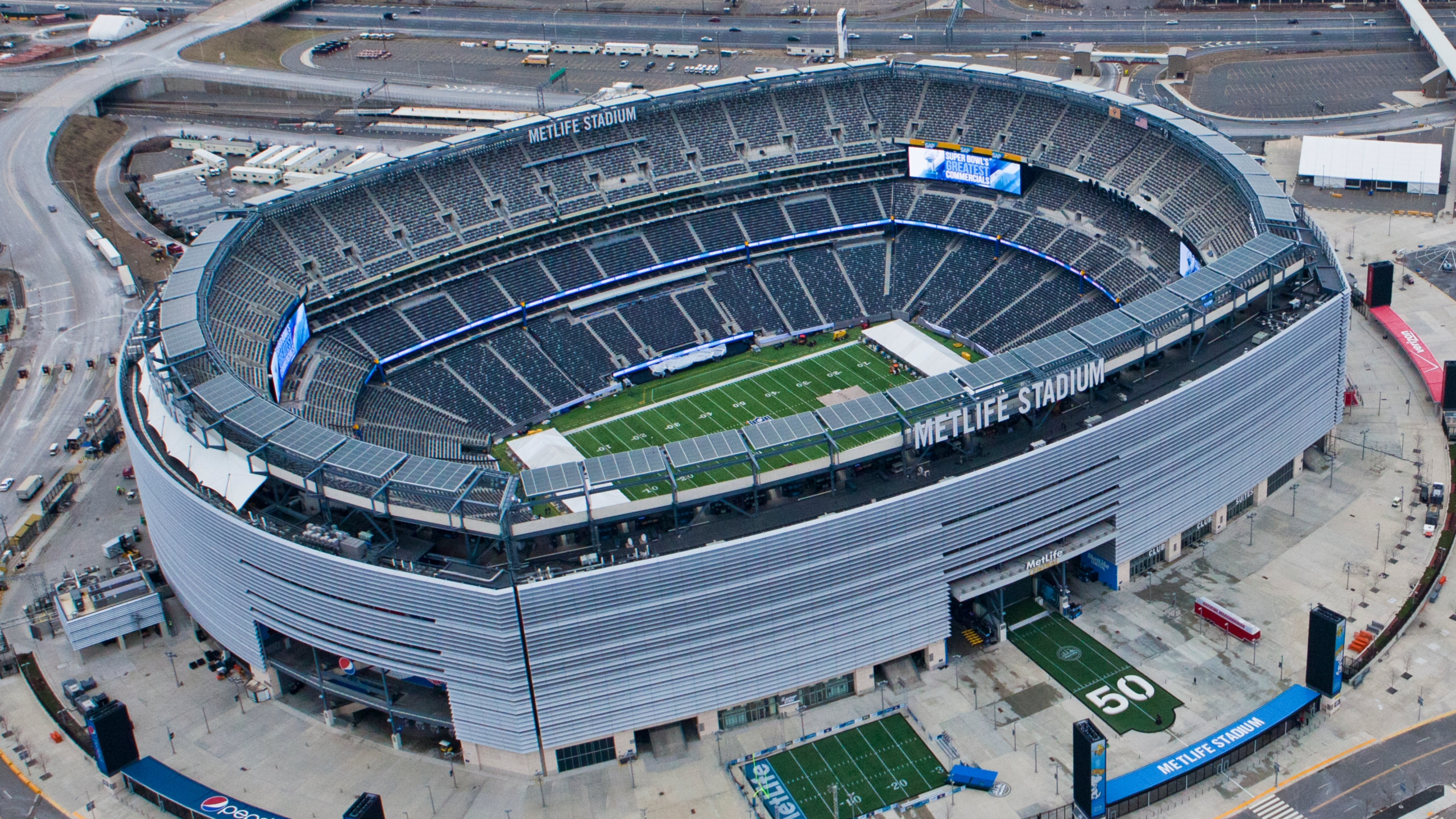
MetLife Stadium is scheduled to host eight World Cup matches in 2026, including the final on July 19. The Meadowlands slate includes group-stage matches on June 13, June 16, June 22, June 25, and June 27, followed by knockout matches on June 30 and July 5, then the final. Four of those dates fall on weekdays: June 16, June 22, June 25, and June 30.
New Jersey is not preparing for a normal MetLife event. State planners have already described the tournament as a different kind of operation from an NFL game day: no general parking at the stadium, no tailgating, and heavy dependence on buses, rail, rideshare, and tightly managed crowd movement.
NJ Transit’s World Cup page says only match ticketholders will be allowed on Meadowlands Rail service, with special service plans and ticket-verification details to come closer to the tournament. The host committee’s travel page says transportation tickets on match days will be reserved exclusively for match ticketholders.
That is the first practical reality residents should understand now: on World Cup match days, parts of the region’s transportation system are being planned first around moving fans, not preserving an ordinary commuting experience.
What residents are most likely to gain
The strongest case for the World Cup is not that it will create a month of excitement. It is that some of the spending and planning tied to the event could leave behind improvements residents still use after the crowds are gone.
The New York-New Jersey host committee projects $3.3 billion in total regional economic impact, $1.7 billion in direct spending, more than 26,000 jobs supported, and $432 million in tax revenue.
State and regional officials have also described more than $62 million in transportation and roadway work around the Meadowlands, including repaving, drainage work, and mobility upgrades meant to improve bus operations and event access. If those improvements meaningfully reduce bottlenecks and improve resilience during heavy traffic or storms, that is a real public benefit.
There is also a plausible upside for some businesses and some communities beyond the stadium itself. The event will draw international visitors into the region for more than a month. Hotels, restaurants, bars, transportation providers, and retail businesses in the right locations may see a real bump. Towns on direct transit lines may get some spillover, and NJ Transit is already promoting leisure destinations beyond the immediate stadium area, including Morristown, to World Cup visitors.
There is also a civic upside that should not be dismissed. Hosting the final of the world’s biggest sporting event is a significant moment for the region. Residents who care about soccer, global culture, or New Jersey’s place on the international stage are not wrong to see that as meaningful. But public pride is only one part of the story. The harder question is what residents have to absorb in return.
What residents are most likely to lose
The most immediate loss is predictability.
For regular riders, weekday match dates are the biggest warning sign. Four matches at MetLife are set for weekdays, including a June 16 match scheduled for 3 p.m. and a June 30 Round of 32 match scheduled for 3 p.m. Those are not late-night-only event windows. They collide directly with ordinary workday travel.
NJ Transit has not yet published full match-day operating plans for ordinary commuters, only high-level guidance that special schedules, ticket verification, and service details will be announced closer to the tournament. That uncertainty is itself part of the burden. Residents already know enough to expect disruption, but many of the specifics that would let them plan around it are still not public.
News reports this week said NJ Transit riders could face a four-hour pre-match boarding restriction at parts of New York Penn Station on game days, with access prioritized for ticketholders. That plan has drawn obvious concern from regular commuters. But even there, the final mobility plan is still described as under development. In other words, one of the biggest practical questions for New Jersey residents is also one of the least settled.
Residents may also lose normal access around the Meadowlands and surrounding corridors on match days. Even people who never set foot in the stadium can expect more congestion, more crowd control, more law enforcement presence, more wayfinding restrictions, and more strain on the surrounding transit network.
For some businesses, the loss may be less obvious but still real. When mega-events arrive, not every local merchant wins. Some see more foot traffic. Others see deliveries delayed, staffing stretched, regular customers staying home, or business pulled toward official zones and larger hospitality players. The existence of crowds does not automatically mean broad prosperity.
The promise of an economic boom should be treated carefully
The World Cup’s supporters are not wrong that the event can create spending. The problem is that headline economic-impact numbers often blur the difference between visible activity and net public benefit.
Sports mega-events have a long history of producing optimistic forecasts before the event and much murkier results after the fact. One widely cited review of World Cup economics found that claims of large host benefits have often been criticized for overstating gains and undercounting displacement, crowding out, and other distortions. Another study of the 1994 World Cup in the United States found no significant employment gain across host metropolitan areas and found a statistically significant negative effect in retail trade employment.
That does not prove New Jersey will come out behind. It does mean residents should ask a narrower, tougher question than “Will there be a lot of spending?” The better question is: how much of the spending is truly new, how much stays in New Jersey, who captures it, and what public costs are required to make it happen?
Right now, the public-facing case is still stronger on excitement than on transparent accounting. The host committee has published a one-page impact summary, but residents still do not have a full public breakdown of assumptions, leakages, or the likely total public burden across transportation, security, staffing, and local government response.
What this could mean for Morristown and Morris County
For readers in Morristown and Morris County, the key point is that distance from MetLife does not mean distance from impact.
The World Cup’s biggest effects will obviously be felt closest to the Meadowlands, Secaucus, Newark, Jersey City, Hoboken, and Manhattan. But the event is large enough that its ripple effects can reach much farther. Transit patterns, hotel demand, regional tourism, security planning, and team-related logistics can all stretch beyond the stadium footprint. State planners have also discussed World Cup-related activity extending into multiple counties, and NJ Transit is already marketing Morristown as a potential destination for visitors.
That does not mean Morristown should expect a guaranteed boom. It means local officials and business owners should think practically. Will downtown restaurants, bars, and hotels benefit from visitors looking for places beyond the immediate stadium zone? Possibly. Will some employers need to think about remote work or flexible scheduling on weekday match dates because of regional transit strain? Also possibly. Could local residents experience spillover without seeing much direct upside? Absolutely.
The likely truth is that gains, if they come, will be uneven. Some places and industries will benefit more than others. Some residents may enjoy the energy of the event while others mainly experience inconvenience.
The biggest practical answers residents still do not have
A lot of the most important questions are still unresolved because planning for an event of this size is still incomplete or still not public in full detail.
Residents still do not have clear public answers to questions like:
- How exactly will regular NJ Transit riders be handled on weekday match days?
- What restrictions, if any, will apply at New York Penn Station, Secaucus Junction, and surrounding transit hubs, and when?
- What backup plans are in place for storms, equipment failures, severe delays, or security incidents?
- How much will police, emergency services, sanitation, and local public works costs rise, and who will pay for that?
- Which municipalities are expected to publish local plans tied to the tournament, and where will the public be able to read them?
These unanswered questions are one reason a bill is moving through Trenton.
A New Jersey Senate measure would require certain agencies, entities, and municipalities involved in official World Cup-related activity, including matches, team base camps, fan zones, and fan festivals, to prepare reports concerning human rights and community impacts, then submit follow-up evaluations after the final.
The bill specifically references issues including fair housing, disability rights, anti-discrimination, anti-trafficking, worker protections, and community engagement.
Whether or not the bill changes before final passage, it reflects something important: lawmakers already understand that a global event like this creates local stresses that need public accountability, not just marketing.
What residents can do now
Residents are not powerless here. They do not control the tournament, but they can prepare and they can press for answers.
The most useful first step is simple: treat the weekday match dates as dates that may affect normal routines even if you do not care about soccer.
June 16, June 22, June 25, and June 30 should be on the radar now for commuters, employers, schools, downtown businesses, and anyone who regularly moves through North Jersey transit corridors.
Employers in areas tied closely to regional commuting may want to think early about flexible hours or remote-work options on those days.
Local officials should be pushed now, not a week before kickoff, to explain expected traffic patterns, transit contingencies, overtime needs, public-safety planning, and any resident advisories.
Business owners should not assume they will automatically benefit just because the region is hosting a global event. They should watch where official foot traffic is actually being directed and plan around their real customer base.
Residents should also ask a basic fairness question: if local communities are being asked to absorb disruption, what exactly are they getting in return? Durable infrastructure? Better transit operations afterward? More business for downtowns? Better emergency coordination? Or just a month of strain and a press release about “global exposure”?
The bottom line
The World Cup may ultimately be a proud moment for New Jersey. It may even leave behind useful infrastructure and meaningful business gains in some places.
But residents should not judge it by excitement alone. They should judge it by whether ordinary life remains workable, whether the public costs are justified, whether the benefits are real and broad enough to matter, and whether officials give people enough notice and enough honesty to plan around what is coming.
That is the real test of hosting a global event. Not whether the stadium looks good on television. Whether the people who already live here are treated like partners instead of obstacles.