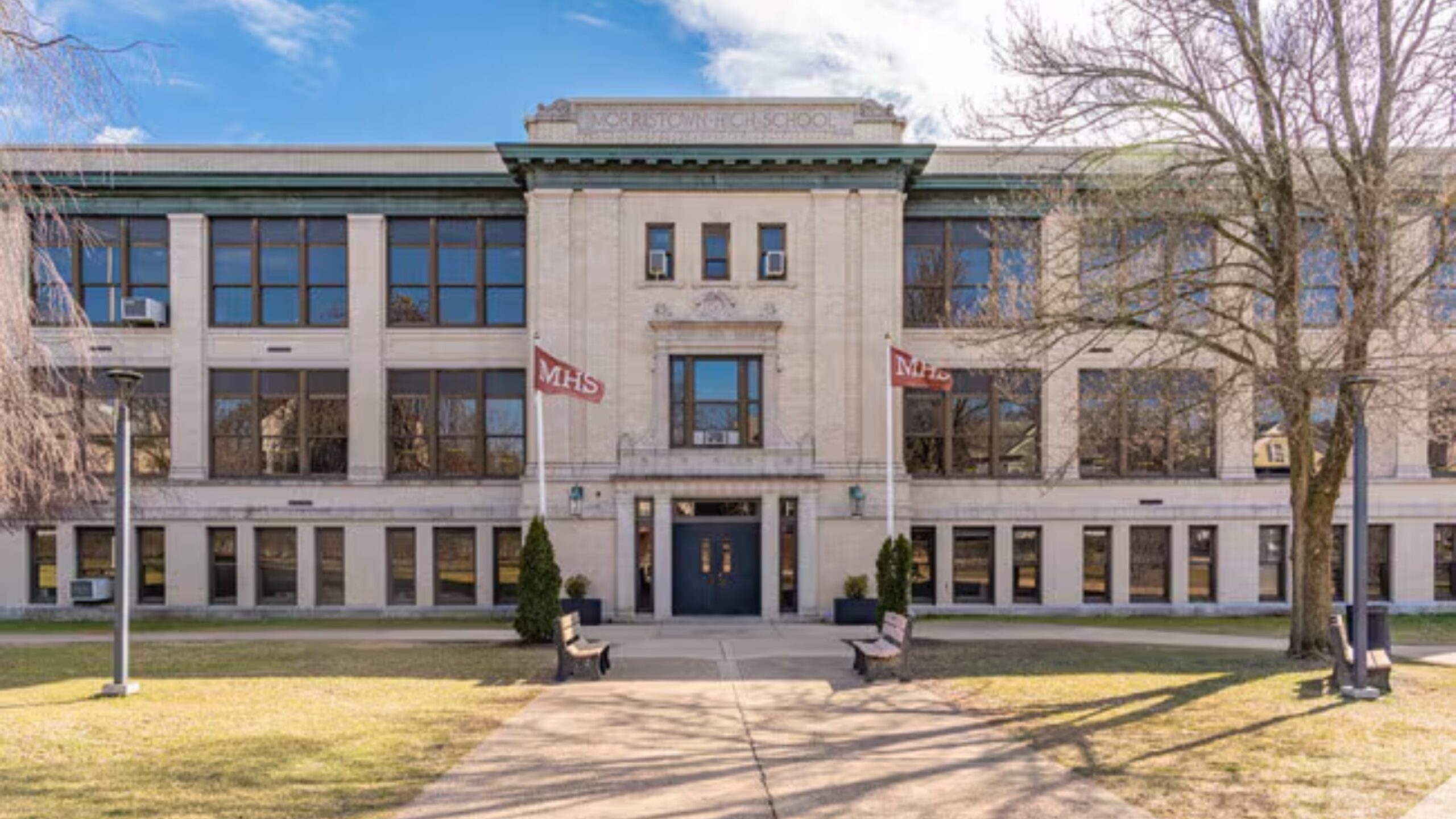
The district says aging roofs, steam-based heating systems, overcrowded classrooms, outdated performance spaces, and an end-of-life high school pool are driving its first proposed bond referendum in nearly 30 years, but the projected local tax impact has not yet been released because the proposal is still under state review.
MORRISTOWN, NJ – The Morris School District has begun publicly outlining the building and program needs it says will shape a proposed bond referendum scheduled for Sept. 15, 2026, including infrastructure work across the district, classroom additions at Frelinghuysen Middle School and Sussex Avenue School, a larger cafeteria at Morristown High School, auditorium upgrades, science lab renovations, and a replacement for the high school pool. The district says the proposal is still under review by the New Jersey Department of Education, which must determine state-aid eligibility before officials can release an estimated tax impact.
District officials say the state review is expected to conclude by early summer, after which they plan to release both the projected state aid and the estimated cost to local taxpayers. The district has released the proposed project list, but not yet the estimated tax impact.
The district says the need is rooted in age and scale. In its FAQ and public presentations, Morris School District says some roofing has outlived its expected lifespan, some HVAC systems still operate on steam rather than hot-water heat, and leaking steam pipes can only be removed by jackhammering the floor. Officials also say the district has already invested more than $55 million since 2014 in buildings and grounds through annual budgets, grants, and capital reserves, but that the remaining needs are too large to cover that way alone.
What the district has publicly described so far is a mix of districtwide repairs and a smaller set of school-specific problems. Across the district, officials say the referendum would fund new windows, roof replacements, HVAC upgrades, building management systems, new boilers, conversion from steam to water heat, classroom ventilators, electrical upgrades, emergency generators, fire alarm upgrades, and bathroom modernization with improved ventilation, accessibility, and touch-free fixtures. The district has not yet released a full public school-by-school project list for all 10 schools, but it has identified several buildings by name in its State of Our Facilities presentation coverage.
At Morristown High School, the district says the cafeteria seats about 300 students, or roughly one-fifth of the school’s enrollment, and needs expansion so students have adequate time and space for lunch. The district also says the historic high school auditorium would receive ADA-related improvements, new lighting, and a modern climate-control system, while the media center would be redesigned as a more digital-focused workspace. Science lab renovations are also proposed at the high school.
At Frelinghuysen Middle School, the district says a longstanding space shortage has pushed some World Language and other classes into trailers. Officials say an eight-classroom addition would bring those classes back inside the building and create space for a STEM lab tied to the district’s broader academic pipeline into the MHS STEM Academy. The district also says the middle school auditorium has outdated seating, lighting, and equipment, and that the proposal would renovate the space and add air conditioning.
At Sussex Avenue School, district officials say rising enrollment has already pushed World Language instruction onto a cart and could force the repurposing of other learning spaces. The proposal includes a three-classroom addition, which the district says would relieve crowding and make room for safety and accessibility improvements. Science lab renovations are also proposed at Alexander Hamilton School, though the district has not yet publicly posted the same level of detail for every other building in the system.
One of the proposal’s most visible components is the Morristown High School pool. The district says the pool is at the end of its functional life and will close if it is not replaced. Officials also say the pool serves Morris School District students, county swim teams, and the broader community, and generates revenue.
District officials have also laid out the argument for why they are pursuing a referendum rather than trying to phase projects into the annual budget. In its FAQ, the district says the annual budget is used primarily for operating expenses such as salaries, health care, utilities, and academic programs, leaving limited room for major capital work. Officials estimate that, based on the district’s average capital spending rate over the last 12 years, it could take at least 35 years to complete the proposed building needs without a referendum. They also say a voter-approved referendum would unlock state debt-service aid that is not available for the same projects if they are paid for through the ordinary budget process.
The district has attached several state-aid figures to that argument, though not yet to the specific Morris School District project list under review. Officials say the district historically receives relatively little state support in its annual operating budget, with state aid accounting for 7.65% of the nearly $135 million budget for the 2025-26 school year. By contrast, the district says the New Jersey Department of Education may reimburse up to 34% of eligible referendum-funded project costs, and district materials say infrastructure work could receive roughly one-third state support.
District materials say building improvements emerged as a priority through the strategic-planning process, followed by a public survey in September and October 2025 and focus groups that included parents, alumni, older residents, taxpayers, staff, and other community members. The district says a summary of that feedback will be presented to the board and used alongside professional building assessments and staff recommendations, according to its community input page.
The district has publicly identified the problems it says are driving the referendum, set a Sept. 15, 2026 vote date, and described the proposal as its first comprehensive building plan in nearly three decades. The final state-aid determination and the estimated local tax impact have not yet been released.