The state has started a public review that could produce legislative recommendations, but no replacement formula or district-level funding changes have been proposed.
TRENTON, N.J. New Jersey has launched a statewide effort to overhaul its school funding system, beginning a process that could affect how billions of dollars are distributed among school districts and how much pressure remains on local property taxpayers.
The Department of Education announced the initiative Aug. 5, describing it as a stakeholder-driven review focused on predictability, transparency, accountability, fairness and changing student needs. The announcement does not establish a new formula, change current aid notices or identify which districts could gain or lose money.
The process begins with an online School Finance Learning Series intended to explain how state aid works. A steering committee led by Education Commissioner Lily Laux and supported by the Hunt Institute, a nonpartisan education-policy organization, is expected to convene this fall. The state says additional public-engagement opportunities will be announced in September. The department’s announcement says feedback gathered during 2026 will inform near-term recommendations to the Legislature and a longer roadmap extending into 2027.
“Education spending is the single largest investment our state makes year to year, and we have a responsibility to ensure we are getting the best return on every dollar spent. By reforming our funding system, we can ensure resources are directed where they have the greatest impact, creating pathways to success for students, strengthening communities, and supporting long-term economic growth,” said Governor Sherrill.
The current system is principally based on the School Funding Reform Act of 2008. The Department of Education’s state-aid archive describes it as the first statewide school formula deemed constitutional by the New Jersey Supreme Court. It was later amended by legislation commonly known as S-2.
Statewide totals can conceal sharply different local results. Current fiscal year 2027 tables show New Jersey providing approximately $12.43 billion in K-12 aid, an increase of about $372.1 million, or 3.09%.
Morris County’s districts collectively receive approximately $248.1 million, an increase of about $3.16 million, or 1.29%. That countywide gain is smaller than the statewide percentage and is not distributed evenly.
The Morris School District receives $10,307,696, a decrease of $21,795, or 0.21%. Morris Plains receives an increase of $75,986, or 4.75%. Parsippany-Troy Hills gains $738,057, or 6%, while Mount Olive loses $274,676, or 0.70%, according to the state’s county summary and district-level tables.
Those figures are current aid allocations. They are not projections of what an eventual replacement or amended formula would provide.
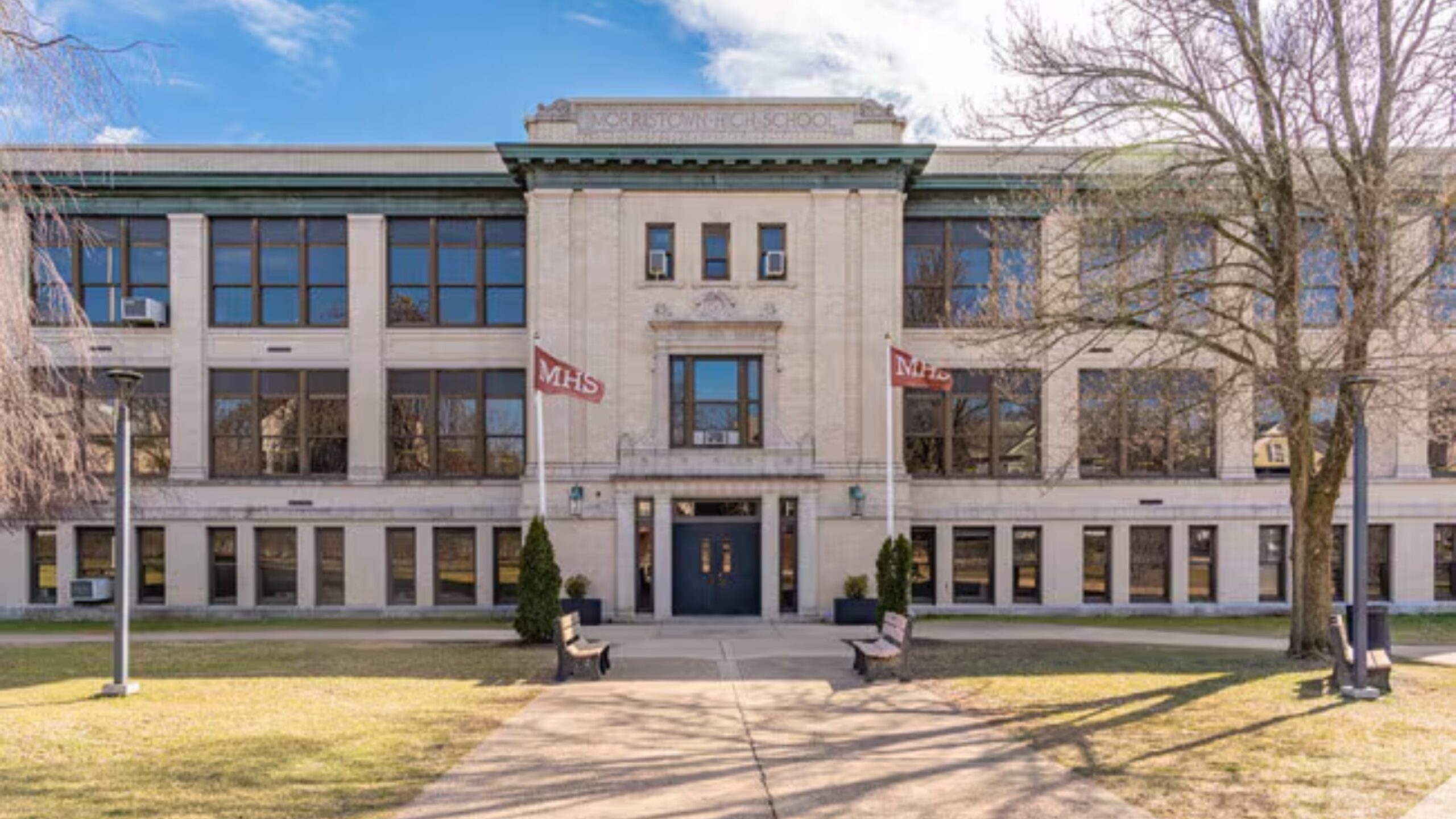
For Morristown residents, the review matters because the school district accounts for the largest portion of the local property-tax bill. A small state-aid reduction does not determine the full school budget, but it can add pressure when salaries, health benefits, transportation, special education and building costs are also rising. Morristown Minute previously examined that relationship during the fiscal year 2027 budget process.
The Aug. 5 announcement leaves major questions unresolved. It does not provide draft legislation, a proposed method for measuring local wealth or a schedule for implementing future changes. It also does not say whether the state intends to revise the formula in time for the next school-budget cycle.
Residents, educators and local officials can register for updates through the School Funding Outreach Project. The September engagement plan will be the first test of how much direct public input the administration intends to collect before making legislative recommendations.