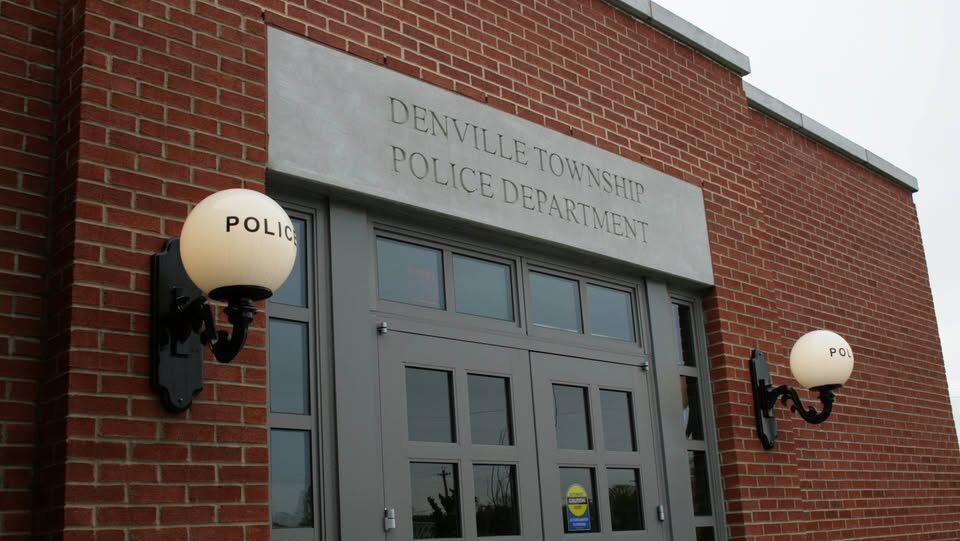
Prosecutors say Joseph Rizos, 37, operated a destructive-device manufacturing operation in 2025 and 2026; officials have not disclosed what led investigators to him or what they believe his intent was.
MORRIS COUNTY, NJ – A 37-year-old Denville man is being held in the Morris County Jail after investigators said they seized 109 individual containers of suspected homemade explosive material, explosive precursors, firearms, ammunition, blasting caps and cell phones during searches of an Avondale Road property on Wednesday, June 24, 2026.
Joseph Rizos, 37, of Denville, was charged with one count of recklessly risking widespread injury or damage, a second-degree offense, and four counts of possession of destructive devices, third-degree offenses, according to the Morris County Prosecutor’s Office. Prosecutors said the investigation remains active and additional charges may be appropriate.
All defendants are presumed innocent unless and until proven guilty in a court of law.
The case has drawn public concern because of the volume of suspected explosive material, the residential setting and the prosecutor’s statement that officials know “matters of national significance” are taking place in Northern New Jersey. Prosecutor Robert J. Carroll said investigators cannot discuss Rizos’ alleged intent while the case remains active.
Carroll said investigators shut down a “potentially dangerous operation” and thanked local, state and federal agencies that responded to what he described as a volatile situation.
What prosecutors say happened
The investigation began in March 2026, according to the prosecutor’s office. Authorities allege Rizos operated a destructive-device manufacturing operation during 2025 and 2026.
On Wednesday morning, June 24, investigators first detained Rizos during a motor vehicle stop, according to prosecutors. Authorities then executed a search warrant at his Avondale Road residence in Denville.
Inside the home, investigators said they found what they described as a home laboratory, explosive precursors, blasting caps, cell phones, firearms and ammunition. Investigators later obtained a second search warrant for a shed on the property.
In that shed, authorities said they found 109 individual containers of suspected homemade explosive material, which prosecutors said were capable of “massive destruction.” Surrounding homes were evacuated as law enforcement and hazardous-materials teams responded.
The prosecutor’s office said investigators found no permit from the New Jersey Department of Labor and Workforce Development’s Division of Public Safety and Occupational Safety and Health, which oversees certain explosives-related permits and inspections in the state.
What investigators say they found
The official public statement from prosecutors says investigators seized or observed:
109 individual containers of suspected homemade explosive material in a shed on the property.
A home laboratory inside the residence.
Explosive precursors, the materials that can be used to make explosive compounds.
Blasting caps, which can be used to initiate an explosive charge.
Cell phones, firearms and ammunition.
The prosecutor’s office has not publicly released the full inventory, the search warrant affidavit, the criminal complaint or laboratory test results confirming the precise composition of each item.
The suspected explosives were stored as vials in a crate with handwritten labels, and the labels identified 1,007 grams of TNT, 546 grams of picric acid, 207 grams of PETN and 1,020 grams of RDX. Searches of the bedroom and basement found additional chemical materials, blasting caps and several firearms.
How Rizos was caught
The publicly confirmed answer is limited.
Prosecutors have said the investigation began in March 2026, that Rizos was detained during a motor vehicle stop on June 24, and that investigators then executed search warrants at his home and shed.
That sequence indicates investigators had developed enough information to seek judicial authorization before searching the property. It does not explain what first put Rizos on law enforcement’s radar.
The public record does not yet say whether the investigation began with a tip, an online purchase, a report from a retailer, a prior police encounter, a neighbor complaint, an injury, an inspection, a fire call, a separate investigation or another source of information. Prosecutors also have not said whether federal authorities were involved from the start or joined after the scale of the alleged materials became clear.
That unanswered path is one of the central public-safety questions in the case. If investigators were able to identify the alleged operation months before the search, the public record may eventually show which warning signs worked. If the case began through chance or unrelated police work, it may raise a different set of questions about how a large alleged explosives operation could continue inside a residential neighborhood.
The agencies involved
The investigation and response involved a wide group of local, county, state and federal agencies.
The Morris County Prosecutor’s Office Special Operations Division, the Morris County Sheriff’s Office, the Denville Police Department, the Parsippany Police Department, the Roxbury Police Department, the Boonton Police Department, the Morristown Police Department and the Morris County Sheriff’s Office Bomb Squad were involved.
State and federal agencies also assisted, including the New Jersey State Police HazMat Unit, the New Jersey Attorney General’s Office, the New Jersey Division of Criminal Justice, the Drug Enforcement Administration’s Newark Division and the FBI Newark Field Office.
The scale of that response points to the risk authorities believed they were managing during the search. Explosive materials can create dangers for police, neighbors, firefighters, emergency medical crews and hazardous-materials responders before any criminal case is resolved.
The charges
Rizos is charged with recklessly risking widespread injury or damage, under N.J.S.A. 2C:17-2C.
Under New Jersey law, a person can face that charge if they recklessly create a risk of widespread injury or damage through the handling or storage of hazardous materials, including when that handling or storage violates laws or regulations meant to protect public health and safety. State law defines widespread injury or damage as serious bodily injury to five or more people, damage to five or more habitations, or damage to a building that would normally contain 25 or more people.
Rizos is also charged with four counts of possession of destructive devices, under N.J.S.A. 2C:39-3A. Prosecutors have not publicly explained why the case includes four destructive-device counts while the search allegedly found 109 containers of suspected homemade explosive material.
Prosecutors said Rizos was detained in the Morris County Jail pending the state’s pretrial detention motion. The public record reviewed for this article did not identify a defense attorney or include a public statement from Rizos.
Why this case raises broader public-safety questions
The Denville case raises practical questions for local officials, regulators, retailers and residents without requiring speculation about Rizos’ intent.
The first question is acquisition. Homemade explosive materials often involve legal products, regulated materials, specialty chemicals or components that can look ordinary until they are combined with other facts. Federal bombing-prevention programs already train retailers and local partners to recognize suspicious acquisition patterns, unusual combinations of purchases and behavior that may point to bomb-making activity.
The second question is storage. Prosecutors allege suspected explosive materials were found in a shed at a residential property. Denville is a suburban Morris County township where many homes sit near other homes, roads, schools, businesses and emergency access routes. In a setting like that, improper storage can create risk before anyone knows a crime may have occurred.
The third question is detection. The prosecutor’s office has not said whether this case was found through a proactive investigation, a tip, retailer reporting, federal intelligence, local police work or some combination. That missing detail matters for public policy because each path points to a different prevention tool.
If retailer reporting played a role, local agencies may want to reinforce training for businesses that sell chemicals, fuel-related products, fireworks-adjacent materials, hobby components or other products that can be misused. If neighbors or local police observations played a role, public education may be the stronger lesson. If federal agencies were tracking online conduct or purchases, the case may point to a different type of investigative pipeline.
The public record does not answer those questions yet.
What remains unknown
Several facts remain unresolved.
Prosecutors have not disclosed Rizos’ alleged motive or intent. They have not said whether any specific target, planned act, written threat, political motive, ideology, grievance or group connection was identified. They have not said whether the firearms were legally owned or whether additional firearms charges are expected.
Authorities also have not released the search warrant affidavit, lab-confirmation results, the full hazardous-materials inventory, cleanup details, evacuation duration, property damage information or a timeline explaining what investigators learned between March 2026 and June 24, 2026.
No injuries have been reported in the official public statements reviewed for this article.
The prosecutor’s office has said additional information will be released at the appropriate time. Until then, the confirmed public record supports a serious explosives and destructive-device case, but it does not support claims about a broader plot, intended target or connection to other events in Northern New Jersey.
What residents should take from the case
Residents should not handle suspected explosive materials, unknown chemical containers, blasting caps, fireworks components, old military-style items or suspicious devices. Police and bomb squads tell residents to leave those materials in place, move away from the area and call 911.
The Denville case also shows why suspicious activity reports can matter before an emergency call. Unusual chemical odors, repeated small blasts, burn marks, visible stockpiling, abandoned containers or concerning threats may all warrant a call to local police, especially when they appear together.
For now, the case is moving through the criminal justice system. Rizos remains presumed innocent, prosecutors say the investigation is ongoing, and the unanswered public-safety question is how an alleged destructive-device operation could develop inside a Morris County neighborhood before authorities moved in.