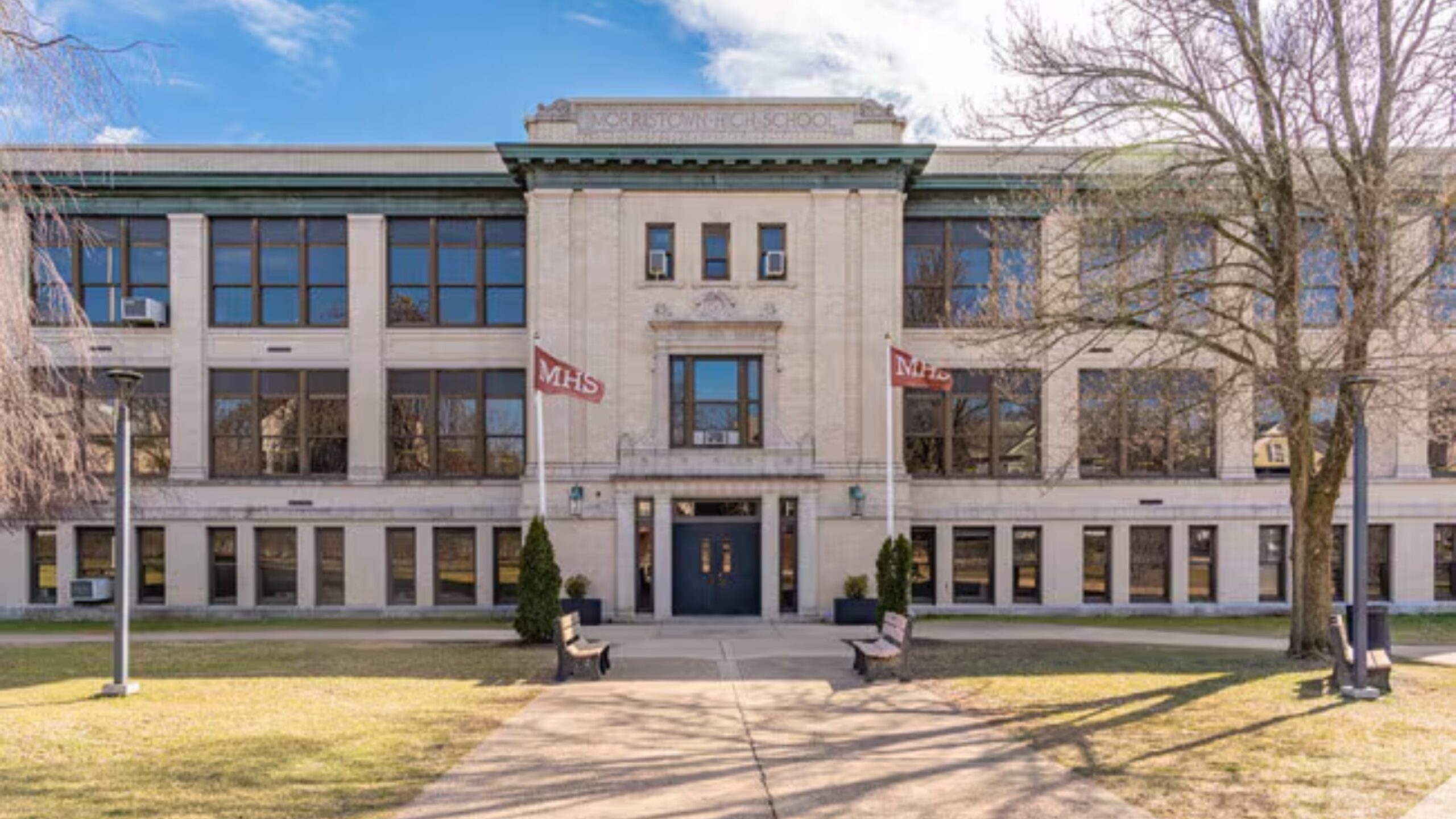
The plan would repair and air condition all 10 district schools and add classrooms at three of them, with state aid expected to cover about $46.4 million; what it costs Morristown and Morris Township homeowners depends on assumptions about interest rates, construction costs and state funding.
MORRISTOWN, NJ – Voters in Morristown and Morris Township will decide a $158.4 million school bond referendum on Tuesday, September 15, 2026, the Morris School District’s first bond proposal in nearly 30 years.
The borrowing would pay for building repairs, classroom additions, air conditioning and equipment upgrades across all 10 district schools, and the state is expected to cover about $46.4 million of the cost through debt service aid.
The measure is a single yes-or-no question and passes with a simple majority. The exact appropriation on the ballot is $158,394,556, and the district would repay the debt over 20 years, similar to a homeowner financing a project with a home equity loan.
The district has scheduled public information sessions and posted an online tax-impact calculator so residents can estimate the cost for their own homes. What follows is an independent summary of what the district is asking, what it would cost, and where the estimates could move.
What the money would pay for
The proposed projects fall into three groups. The largest is basic building work: roof and window replacement, new bathrooms, fire alarm and electrical upgrades, and HVAC systems that would air condition every school and space in the district. Some schools still run on steam heat, and the district says leaking steam pipes can only be removed by jackhammering floors.
The second group covers academics, including science lab renovations at Alexander Hamilton, Frelinghuysen Middle School and Morristown High School, a rebuilt MHS media center, and full auditorium renovations at MHS and FMS.
The third covers the high school student experience: a cafeteria expansion and replacement of the MHS pool.
Three projects address capacity and safety directly. Frelinghuysen Middle School would get an eight-classroom addition to end its reliance on trailers, where World Language and other classes are now held; the district says trips to and from the trailers in all weather cut into instructional time, and music is taught in a former teachers’ lounge.
Sussex Avenue Elementary School would get a three-classroom addition, an elevator to meet ADA standards, a secure visitor vestibule and classrooms moved away from exposed windows. Fire alarm and emergency generator upgrades are proposed at several schools, and asbestos abatement is planned in construction areas.
The MHS pool, which opened in 1983, is described by the district as at the end of its life, with parts no longer available. The district says it would close for safety reasons if not replaced, that swim teams across Morris County use it, and that a closure would cost the district both a revenue source and the expense of decommissioning the pool.
What each project costs
The full project figures are not broken out school by school in the ballot materials. What the state has certified is the final eligible cost at each school, the portion the New Jersey Department of Education counts toward aid.
Those figures total $136,629,115, led by Morristown High School at $34.1 million, Frelinghuysen Middle School at $24.1 million and Sussex Avenue at $15.4 million, followed by Alexander Hamilton ($13.3M), Alfred Vail ($12.5M), Thomas Jefferson ($12.4M), Lafayette Learning Center ($11.4M), Hillcrest ($7.3M), Normandy Park ($5.1M) and Woodland ($1.1M).
Eligible cost is not the same as total cost. The gap between the $136.6 million in eligible costs and the $158.4 million appropriation reflects work the state will not help pay for.
According to the district, the pool replacement and some of the added classroom space were ruled ineligible “excess costs.” New construction is reimbursed under a state formula at $143 per square foot, a rate the district notes was set years ago and now sits well below actual construction prices, which shifts more of the addition costs onto local taxpayers.
What it would cost taxpayers
If voters approve the bond, the district estimates the added school debt tax at about $38 per month for a Morristown home at the township’s average assessed value of $635,443, and about $41 per month for a Morris Township home at its average assessed value of $560,500.
Those figures work out to roughly $456 and $492 per year. The district cautions residents to use their home’s assessed value, not market value, and to look it up through the Morris County Tax Board before using the calculator.
The estimates rest on stated assumptions: a 4% interest rate, a 20-year repayment schedule, 29.33% debt service aid, and no growth in the district’s ratable base beyond its January 2026 level. Those assumptions are reasonable but not fixed.
The actual interest rate would be set by a competitive bond sale; as of mid-July 2026, 20-year AAA municipal bonds were yielding about 4.1%, close to the district’s estimate.
The $46.4 million in state aid is an annual payment that, by the district’s own statement, is subject to appropriation by the Legislature each year and is not guaranteed for the life of the bonds. And because the estimate assumes no new ratables, per-home costs could come in lower if the tax base grows.
New Jersey seniors may also qualify for property tax relief through the ANCHOR, Senior Tax Freeze and Stay NJ programs.
What alternatives the district weighed
The district frames the bond against paying for the work out of its annual operating budget and capital reserve, which it says have funded more than $55 million in building upgrades since 2014.
It argues that route is now too slow, estimating that completing the same list at its recent capital-spending rate would take at least 35 years, and that improvements funded through the annual budget do not qualify for state aid.
State construction grants, an alternative to debt service aid, are no longer available because the state’s bonding authority for them has been spent. State aid covers only 7.65% of the district’s roughly $135 million operating budget, but the Department of Education pays up to 34% of eligible costs for projects approved through a referendum.
If the referendum fails, the district says it would not be able to air condition all buildings and that aging systems would compete for money with salaries, healthcare and academic programs.
What happens next
The Board of Education’s next public meeting is July 27 at 7:30 p.m. at Morristown High School.
The district has scheduled a virtual information forum on August 11 from 7 to 9 p.m., an in-person session at the Morristown & Morris Township Library on August 12 at 10 a.m., and a forum at the FMS auditorium on September 1 at 7 p.m.
To vote, residents must be registered by August 25. Vote-by-mail applications must reach the county by September 8 to receive a ballot by mail, and polls will be open September 15 from 6 a.m. to 8 p.m.
Full project lists, the tax calculator and voting details are posted on the district’s referendum page, and the board approved the ballot language in June.