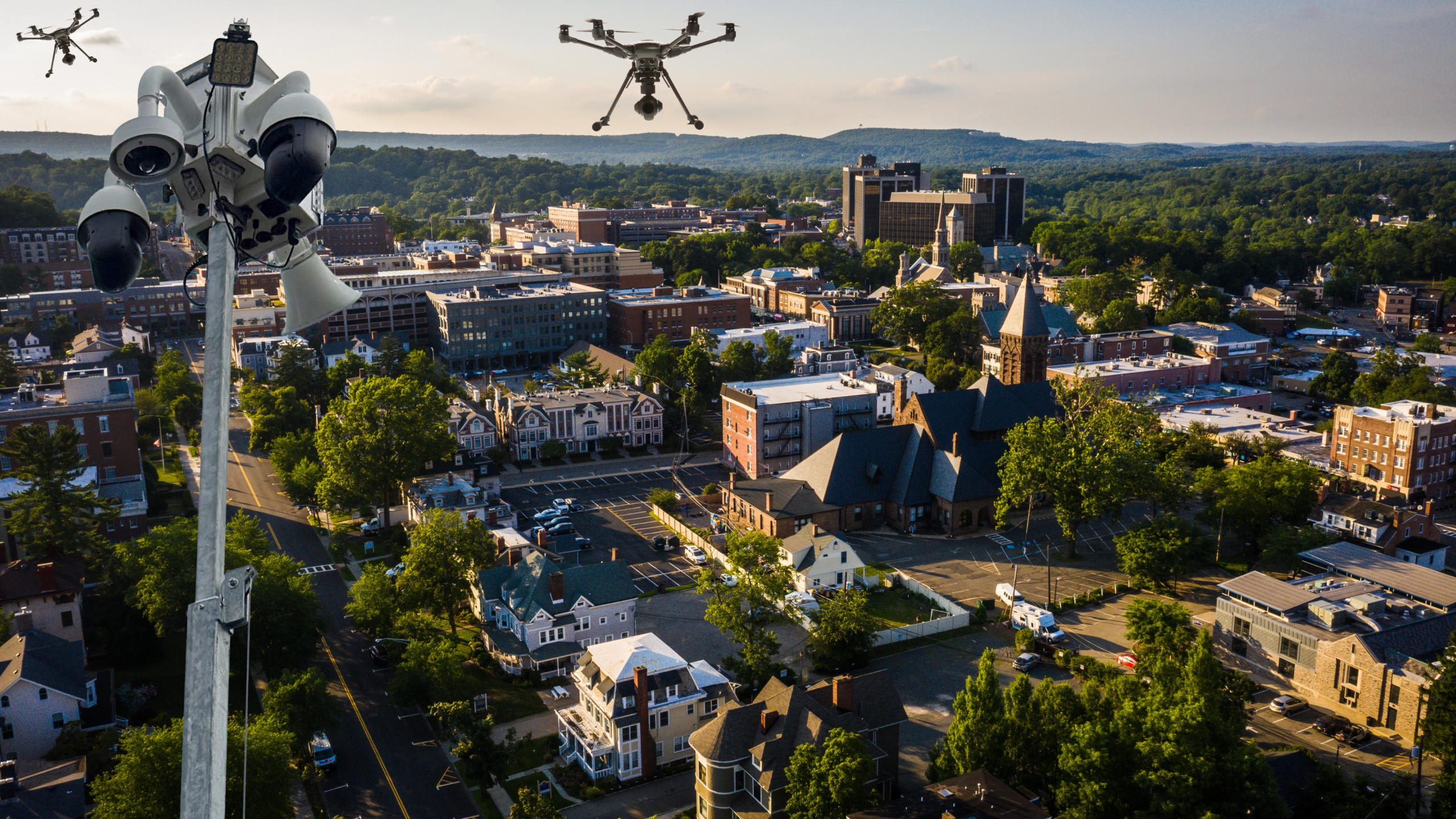
Public records trace a $9.39 million federal counter-drone project, at least $1.52 million in recent automated-license-plate-readers, fine-funded parking cameras and a planned A.I.-ambulance-camera purchase, but no single countywide accounting identifies the systems, their general locations, their data rules, or their future costs for taxpayers.
Morristown Minute’s investigation found a fragmented public record documenting over $12 million in contracts and payments to private vendors for automated, AI-assisted and networked surveillance technology, while leaving basic questions about devices, locations, data practices and future costs unanswered.
MORRISTOWN, NJ – Public records reviewed by Morristown Minute identify at least $12,244,718.79 in distinct contract awards and direct payments since 2020 for counter-drone equipment, public-safety cameras and network infrastructure, aerial property imagery, and automated camera systems at parking and utility facilities in Morris County.
Additional records document automated license plate readers (ALPRs), AI or automated camera-based parking enforcement, body-worn cameras and a planned purchase of AI dashcams for county ambulances. Several of those costs remain undisclosed. Others are supported by federal or state grants that can overlap with the vendor payments found in county bill lists.
The money & the problem
The clearest finding is that public records identify at least $12.2 million paid or committed, with more systems planned and no single public inventory that lets residents see the whole picture.
That minimum combines six separate sets of records:
- $8,495,668.47 in identified counter-drone contracts awarded to Dedrone, now part of Axon;
- $2,425,861.20 in direct Morris County payments to Packetalk, a New Jersey company that provides video surveillance, automated license plate recognition and wireless networking systems;
- $710,767.12 in county payments to Nearmap, which provides frequently updated aerial imagery, mapping products and AI-assisted property analysis;
- $299,222 for a Morristown Parking Authority security-camera contract awarded to Signal Electric Corporation;
- $46,800 for a Morris County Municipal Utilities Authority camera and radio-link contract awarded to Packetalk; and
- $266,400 paid to CDW Government under a federal technology grant intended to expand the county’s regional automated license plate reader network.
This calculation does not include the remaining $1,257,794 in recent ALPR grant allocations as spending because public records do not establish that the full amount has been spent. It also excludes the SafetyStick parking programs, which use solar-powered, pole-mounted devices to automate parking enforcement, and the county’s proposed ambulance cameras because the records reviewed do not disclose their prices.
The total can be calculated precisely, but the available records do not always identify precisely what the money purchased. Packetalk illustrates the problem. The company sells automated plate readers, standard cameras, radio links, video storage and other public-safety equipment, while county bill lists frequently identify only the vendor, payment amount and a brief description. The full $2.43 million can therefore be classified as camera and network infrastructure, but the records do not describe if every dollar went to ALPR or AI spending. Residents can see how much the county paid Packetalk but cannot determine every product purchased or capability added.
The records are also incomplete about what happens after the initial purchase. Most of the counter-drone money and recent ALPR grants came from the federal or state government, but they remain public dollars. Grants may pay for equipment without covering software, data storage, maintenance and replacement indefinitely, potentially leaving local agencies responsible for those costs after the funding ends.
A resident trying to reconstruct these systems must move among county bill lists, municipal resolutions, grant announcements, meeting packets and cooperative-purchasing notices. Those records often omit the number of devices, their general placement, the data collected, how long it remains available, who can search or receive it, what the system will cost after a grant ends and, in several cases, which product was purchased.
Morristown Minute spent a months-long investigation filing OPRA and FOIA requests and sending press inquiries to Morris County, state and federal agencies. The responses still did not produce a complete inventory. This article includes what we have so far.
The terms describe different kinds of technology
Artificial intelligence, automation and surveillance infrastructure overlap, but they do not mean the same thing.
AI software classifies information or identifies patterns. In this article, that includes software sold to classify drones or detect driving behavior. Automation allows a sensor and software to perform work that once required a person at the scene, such as reading a license plate or recording a car in a no-parking zone. A person may still review the result before the government acts.
Surveillance infrastructure includes the cameras, radio-frequency sensors, network links, storage systems and searchable databases used to observe or reconstruct activity involving vehicles, people, airspace or property. So a networked camera is not automatically an AI camera, but it may include automated systems.
This review covers systems that monitor, record, classify or search activity and property, along with products that Morris County expressly described as AI. It does not include ordinary office software or parking-payment apps with no identified monitoring function.
A $9.39 million counter-drone system
The largest project found during Morristown Minute’s investigation is a $9.39 million regional system intended to detect, identify, track and monitor drones.
The Morris County Board of County Commissioners accepted a $9,390,904 federal Counter-Unmanned Aircraft Systems grant on Feb. 11, 2026. The grant passed through the New Jersey Office of Homeland Security and Preparedness and runs through Sept. 30, 2028. FEMA created the counter-drone grant program to expand state and local capabilities before the 2026 FIFA World Cup and other large events.
Related county records identify four counter-drone awards totaling $8,495,668.47.
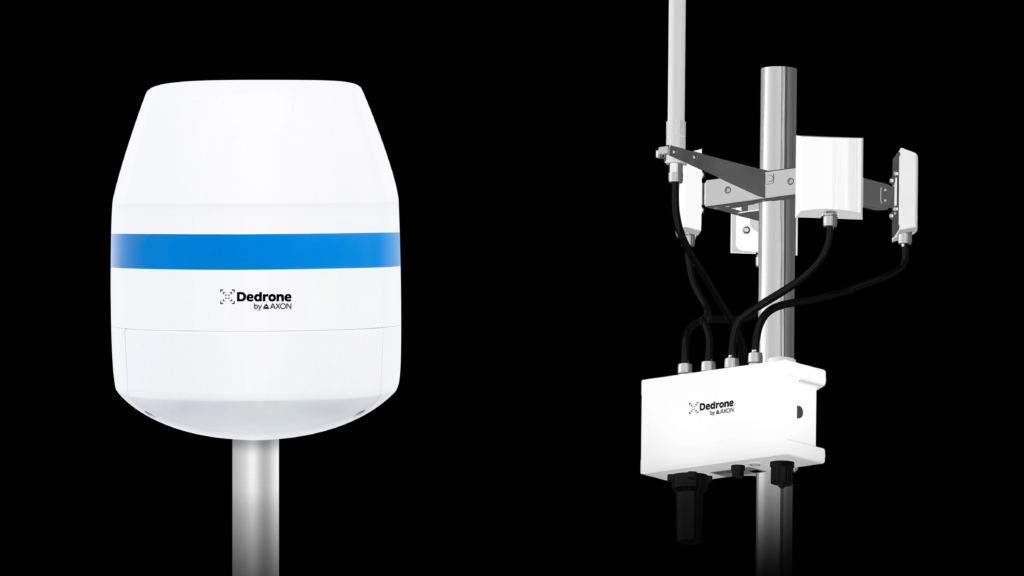
Two awards totaling $7,955,966.58 went to Dedrone, a counter-drone technology company now owned by Axon. Dedrone sells sensors and software designed to detect drones, identify certain aircraft and track their movement. Of that 7.95M awarded to Dedrone/Axon, $7,405,810.58 purchased 36 months of Axon Air, their public safety drone paltform, and Dedrone RF-160, RF-360 and RF-900 equipment and software. A later award gave Axon another $550,156 for Dedrone hardware, software, licensing and training.
The remaining awards were $394,047 to CDW Government for equipment described only as compliant with federal restrictions on certain telecommunications and surveillance products, and $145,654.89 to SHI International for software. Both information-technology resellers that supply government agencies with hardware, software and related services from other vendors.
A counter-drone detection system looks for aircraft that may be too small, distant or fast for a person to follow reliably. Some Dedrone sensors listen for radio communications between a drone and its controller. The company’s software can use those signals to classify a drone, follow its movement and, under suitable conditions, estimate the location of its operator.
The Dedrone products purchased by the county and identified in county records perform different parts of that process. The RF-160 detects and classifies radio signals associated with drones. The RF-360 can combine information from multiple sensors to estimate direction and location. The RF-900 receives Remote ID, ADS-B and other signals used to identify aircraft.
Axon says its DedroneTracker.AI software can also combine radio-frequency data with radar, optical cameras and acoustic sensors, using AI and machine learning to sort detections and prioritize possible threats. Those are capabilities offered by the company, not necessarily a description of Morris County’s complete system. The county’s posted records do not include a full equipment schedule, so they do not show how many sensors were ordered or whether the system includes every sensor type or capability Axon offers.
These four public awards account for $8,495,668.47, or about 90.5% of the original $9.3M grant. The remaining $895,235.53 of the grant is unmatched to a specific contract in the posted records reviewed for this article.
The record establishes detection and tracking equipment. It does not establish that Morris County bought equipment that can jam, intercept or disable a drone. Federal rules adopted in July 2026 treat detection and mitigation as separate capabilities and require additional training, certification and federal coordination for mitigation.
The project is regional. A May 13 county resolution allows Morris County to transfer possession and ownership of grant-funded equipment to participating counties and municipalities. The resolution does not name the recipients. It makes them responsible for the equipment’s proper use, care, maintenance and safeguarding, as well as grant reporting and audit requirements.
The public record therefore identifies the grant total, four awards involving three vendors and several Dedrone product families. It does not identify sensor quantities, general location categories, participating jurisdictions, the data collected from drones and controllers, retention and sharing rules, false-positive testing, local audit procedures or who will pay for subscriptions, maintenance and replacement after the grant funding and current contract terms expire in 2028 or beyond.
License plate readers across Morris County
An automated license plate reader, commonly called an ALPR, is a camera linked to software. The camera photographs a passing vehicle. Optical character recognition (OCR) turns the plate image into searchable text and associates it with a time and place. The system can compare the plate with a list of vehicles police have a specific reason to locate and can preserve the scan for a later search.
Every vehicle passing the reader can be recorded, including vehicles with no connection to an investigation. A match is an investigative lead. New Jersey’s statewide ALPR directive requires an officer to confirm the plate and determine whether there is a lawful basis for a stop.
The same directive requires covered ALPR scans and records to be kept for three years and then purged, unless the data has been moved into an active investigation or pending court matter. It also requires authorized users, training, access logs and annual agency audits. A statewide interface allows authorized law-enforcement agencies to search data collected elsewhere in New Jersey without negotiating a separate agreement each time.
New Jersey’s 2024 ALPR audit list included 26 participating Morris County law-enforcement agencies, including Morristown, Madison, Denville, Morris Plains, Florham Park, Mountain Lakes, Rockaway Township, Pequannock, Lincoln Park, Mendham Borough, Mendham Township, Mount Olive, Wharton, the Morris County Sheriff’s Office and Morris County Law and Public Safety. Appearance in the audit system shows ALPR activity or access subject to the state rules. It does not disclose how many cameras an agency owns.
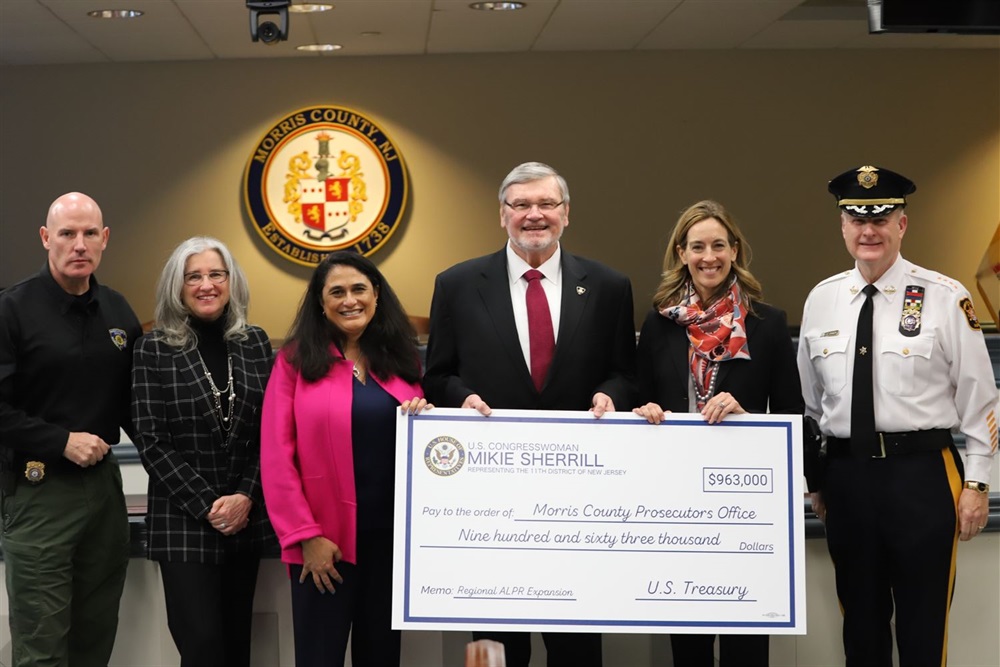
The Morris County Prosecutor’s Office announced a $963,000 federal grant in March 2024 to add fixed and mobile readers to an existing regional network. The announcement says the county Office of Emergency Management purchases the equipment and maintains the network. It gives no vendor, device count or location list.
A county grant schedule reviewed by Morristown Minute reported $266,400 spent by Dec. 31, 2025, leaving $696,600 of the federal award unspent at that point. The schedule listed March 31, 2026 as the end date. Posted county records reviewed for this article do not show what happened to the remaining balance after that date.
The federal award followed $561,194 in state-announced 2023 allocations within Morris County: $372,000 for the Prosecutor’s Office, $72,000 for Long Hill, $69,194 for Chatham Township and $48,000 for Dover. The two announced rounds total $1,524,194. An allocation records money made available, not the final amount paid to a vendor.
Municipal resolutions reveal parts of the physical network.
Long Hill used its $72,000 grant for six Packetalk cameras at six border locations, or $12,000 per installed camera. Morris Township approved up to $45,000 for Packetalk ALPR cameras and installation in December 2022.
Montville approved $50,000 in 2021 for a Packetalk package that included six fixed cameras, installation, modems and one optical-character-recognition license. It approved another $101,132 Packetalk purchase in June 2026, although the posted resolution does not establish that the full later purchase was for ALPR equipment.
Chatham Township approved $18,937 for seven stationary readers in November 2025. The resolution references federal grant money, so that purchase may overlap the town’s earlier $69,194 allocation. Mount Arlington received a $277,000 grant for a mixed project involving security cameras and ALPRs at public buildings, parks, attractions and entry points. Its announcement does not separate the ALPR share.
An independent review of 150 unique PDFs in the county’s public bill-list archive found $2,425,861.20 in direct Morris County payments to Packetalk from 2020 through July 22, 2026. A 2023 entry expressly identifies $34,000 for ALPR video storage. Most entries give only the vendor name and amount.
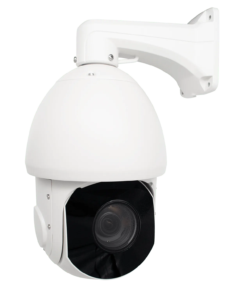
New Jersey knows the coordinates of permanent and portable fixed readers. New Jersey’s statewide ALPR directive requires an agency to report the coordinates when it installs or moves one, and the State ALPR Coordinator is supposed to use that information to reduce duplicate placements. Residents do not receive a comparable public list of device counts or general location categories by municipality.
The latest statewide audit report located by Morristown Minute covers 2024. In 2024 the state said 523 agencies submitted certifications for ALPR systems. The state reported two significant violations involving users who had not completed required training, one citizen complaint, and no reported data misuse or data-privacy violations. Both training violations were corrected.
The audit, required every year, tests agency certifications and samples of searches. It does not review every scan, alert or historical query. Attorney General Directive 2022-12 calls for an annual public audit of the ALPR system to be published by March 31 the follwiing year, each year the system is in use. The corresponding report for the 2025 audit cycle has yet to be publsihed as of August 19, 2026.
The records-request trail shows how difficult it is to obtain the local details.
On Aug. 6, Morris County records custodian Sheila M. Leary told Morristown Minute that the Office of Emergency Management (OEM) had “no responsive documents” in reponse to our OPRA request for grant, procurement, spending, vendor and equipment records concerning the county ALPR network. That response is notable because the Prosecutor’s Office previously said OEM would purchase the additional readers and maintain the regional network. Leary referred our request to the Prosecutor’s Office and closed it.
Morristown Minute followed up on Aug. 6, asking the county to recheck that determination, citing records showing that OEM maintains the network, a $266,400 grant-funded purchase and a $34,000 Packetalk ALPR-storage purchase. The follow-up asked whether the search included OEM, Purchasing and Audit records, or whether the county considered those records to be held exclusively by the Prosecutor’s Office; no response had been received as of Aug. 19.
A separate Prosecutor’s Office request, sent Aug. 6, seeks the current county ALPR policy, a countywide device index without precise locations, local agency policies, 2023 through 2025 audit records, coordinator records, and complaint and violation reports. Assistant Prosecutor and records custodian Thomas C. Schmid asked on Aug. 17 for an extension through Aug. 24. (We will update the community when the records are received.)
Morristown Minute also asked the Attorney General’s Office on Aug. 6 for comment about the missing 2025 public audit report and followed up on Aug. 18. No response had arrived as of Aug. 19. A federal Freedom of Information Act request for a $963,000 COPS grant file was acknowledged by the Justice Department on Aug. 7 and remains pending.
Boonton and Dover automate parking enforcement
Morristown Minute reported in June that Boonton would begin a SafetyStick pilot on Main Street in July. SafetySticks are gray, solar-powered roadside devices containing radar and a camera.
When a vehicle remains in a restricted space, the system creates an evidence file containing a photograph, plate, date, time and location. Municipal staff or police review the file before a summons is mailed. The equipment automates detection and evidence collection. A human makes the enforcement decision.
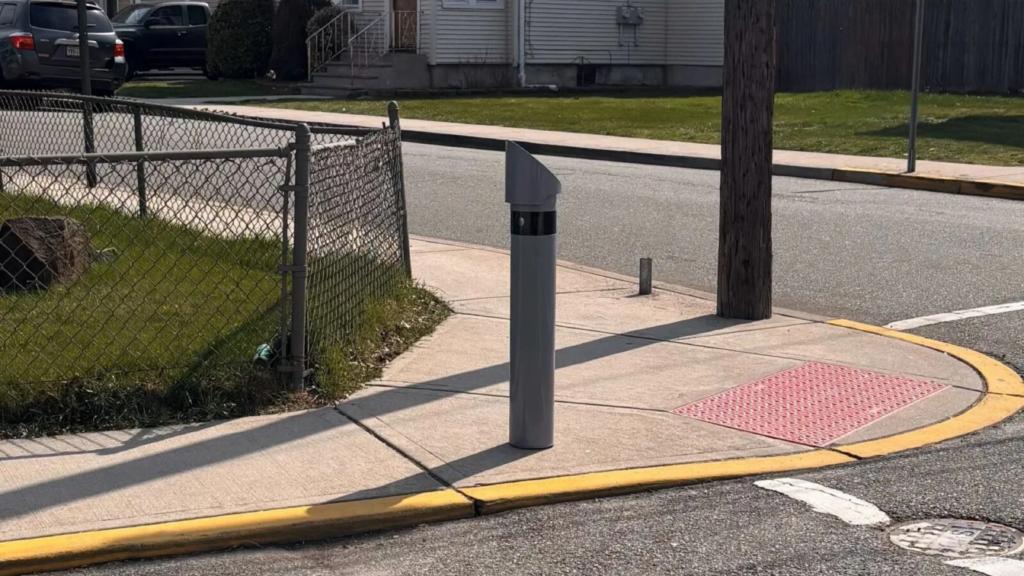
Boonton’s governing body adopted Resolution 26-93 on March 16, 2026, authorizing as many as 100 Municipal Parking Services devices for hydrants, bus stops, crosswalk approaches, loading zones and other restricted areas. The number is a contract ceiling. It does not prove that 100 devices were installed.
The town’s public pilot page says the system records stationary vehicles associated with possible parking violations, captures no audio and de-identifies faces and other personal features before images are transmitted and stored. Access is limited to authorized Boonton police and parking employees and authorized Municipal Parking Services staff.
The page says data remains available under applicable municipal retention policies. It gives no number of days or years. It also says authorized users can search violation histories.
The posted resolution refers to an “Exhibit A” contract, but the exhibit is missing from the online file. Parking-industry reporting on the arrangement says the town pays no installation charge and Municipal Parking Services, the vendor, receives a percentage of each paid violation. The posted record does not disclose the percentage, contract term, termination terms, total vendor receipts or the number of events rejected by police.
Dover adopted SafetySticks earlier for hydrants, bus stops, crosswalks and loading zones. Its June 2025 policy set a $60 fine and allowed towing. The posted records reviewed for this article do not disclose Dover’s device count, vendor share, retention period, citation totals, rejection rate or appeal results.
Municipal Parking Services markets its larger platform as AI-driven. Boonton’s public description establishes radar detection, plate photography and human approval. It does not identify a machine-learning model that decides whether a violation occurred.
Morris County plans AI dashcams for ambulances
Morris County posted a notice on Aug. 14 stating that it intends to buy “ambulance AI dashcam equipment, licensing and software” from Samsara through a national Sourcewell contract, identified as “Sourcewell RFP #102924-SAM.” The county anticipated joining the contract on Aug. 26, when the public comment period ends. No award had been posted as of Aug. 19.
A dashcam records what happens around a moving vehicle. Samsara sells road-facing cameras and dual-facing cameras that record both the roadway and the driver. Depending on the model and settings, its software can identify phone use, drowsiness, a missing seat belt, speeding, rolling stops, lane departures and collision risks. It can issue spoken coaching alerts and associate footage with a driver profile. Samsara also sells side, rear and interior camera systems.
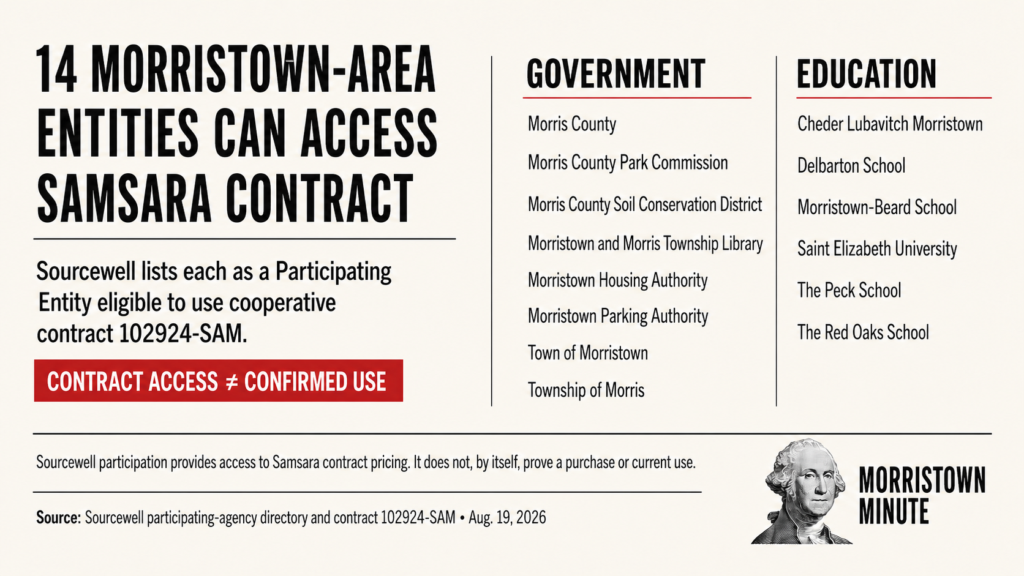
Sourcewell contract 102924-SAM makes a broad catalog available, including AI dash cameras, GPS tracking and vehicle telematics, equipment monitoring, facility surveillance cameras and other fleet-management technology. That catalog does not establish that Morris County intends to purchase each of those products.
The county’s notice identifies its planned purchase only as “ambulance AI dashcam equipment, licensing and software.” It does not disclose the price, number of ambulances, product numbers, camera positions or specific features selected. It also does not say whether cameras will face employees or patient areas, whether audio or driver-identification features will be enabled, what triggers recording, how long footage remains available, who can export it or whether it may be used in employee discipline.
Those choices determine whether the system records only the road or can also capture employees, patients, conversations and bystanders, including medical information. None of those settings appears in the posted purchasing notice or the general Sourcewell contract description.
Aerial images let officials review property over time
Morris County gives participating municipalities access to Nearmap, a high-resolution aerial-imagery service used for engineering, public works, law enforcement, planning, zoning, code enforcement and tax assessment. The county described the service as a subsidized enterprise arrangement in its 2025 budget announcement.
The county’s bill lists show $710,767.12 in payments to Nearmap from 2020 through June 24, 2026. Annual payments were $60,000 in each of 2020, 2021 and 2022, $63,000 in each of 2023 and 2024, $226,142.12 in 2025 and $178,625 through the first half of 2026.
Nearmap gives officials recent and historical overhead and angled images. An employee can compare the same property across different capture dates without visiting it, making changes to buildings, roofs, pavement or vegetation visible over time.
Nearmap separately sells AI Insights, which can identify building footprints, roof features, vegetation, pavement and other objects. The Morris County records reviewed for this article confirm aerial imagery and the government uses listed above. They do not identify the subscription tier or establish that the county purchased those AI layers.
The posted records also do not name every participating municipality, describe access logging, show whether the imagery has supported a tax change or code case, or explain how a property owner can inspect and challenge an image used in a government decision.
Other cameras and unspecified AI
Parking Cameras
Morristown’s parking facilities have their own camera network. The Morristown Parking Authority awarded $299,222 to Signal Electric Corp. on April 16, 2025 for security cameras, network video recorders, monitoring software, related materials and one year of maintenance.
The authority’s bid schedule names work at DeHart, Vail, Dalton and Ann/Bank facilities. The posted award does not state the final number of cameras, retention period, who can view live or recorded video, whether footage is shared outside the authority or whether any analytics are enabled. The documents establish a camera and recording system. They do not identify AI.
The Morris County Municipal Utilities Authority approved $46,800 in March 2025 for four Packetalk pan-tilt-zoom cameras and four radio links. Two cameras were assigned to its Mount Olive vegetative-waste facility and two to its Parsippany facility, with video connected to county Law and Public Safety servers. Packetalk offers four types of these cameras with intelligent video analysis, AI-powered analytics and embedded license plate recognition, but the meeting record does not identify which models were purchased or whether those features were included or enabled.
Body-worn Cameras
Body-worn cameras form another established layer. A body camera records video and audio from an officer’s uniform during covered encounters. The Morris County Sheriff’s Office says in its current public policy that all sworn personnel use Axon Body 4 cameras. Morris Township, Madison, Randolph and other municipal departments also publish body-camera notices or policies.
When paired with optional Axon services, Axon Body 4 cameras can livestream video, show camera users on live maps, send alerts, upload recordings remotely, support two-way communication, activate recording wirelessly, combine body- and vehicle-camera footage, manage stored evidence, translate conversations in real time and supply audio to Draft One, which automatically drafts police-report narratives.
Our reported nearly $12 million calculation does not include a countywide body-camera amount because no current public inventory supplies the total number of cameras, the combined municipal spending or the cost of storage. The absence of that figure is another limit on any countywide total.
Private Home Camera Registry & Surveillance Database
Morristown and Morris Township maintain voluntary registries of privately owned cameras. Police use the registry to identify a home or business that may have relevant footage after an incident. Registration does not give police a live feed, and an owner decides whether to provide a recording when asked.
Morris County’s 2025 budget announcement also says the county is investing in equipment, software, and AI for the Prosecutor’s Office to process and store digital evidence. The announcement gives no product name, feature list, contract value or data policy.
A 2022 Brennan Center report and 2019 entry from The Atlas of Surveillance, a national surveillance database, lists Morristown Police as a user of Skopenow, an investigative platform that searches and analyzes public online information such as social media profiles. Skopenow says its law-enforcement products gather material from across the internet, analyze relationships and produce investigative reports.
Our review found no sufficiently reliable local public record establishing a Morris County deployment of public facial-recognition cameras, acoustic gunshot detection or automated school-bus stop-arm enforcement.
What remains outside the public record
The posted records establish public spending and the existence or planned purchase of multiple systems. The level of detail changes with each agency and each purchasing method.
The counter-drone resolutions identify grant and contract amounts without sensor quantities, recipient jurisdictions or local data rules. The ALPR announcements give grant totals without a public countywide device inventory, while the county and Prosecutor’s Office records requests remain unresolved. The SafetyStick resolution is missing its contract exhibit. The Samsara notice is missing its quote and camera configuration. The Nearmap bill lists do not identify the subscription tier. The Morristown Parking Authority camera award gives no retention or access policy.
Cooperative contracts, grant announcements and proprietary-product exceptions can satisfy purchasing rules while placing the product schedule, quote or operating policy somewhere outside the public notice. A resident can learn that money was authorized without learning what was installed.
Several requested records are still pending. Morris County had produced no ALPR documents as of Aug. 19, and the Office of Emergency Management claims to have no ALPR records despite being named as repsonsible for ALPR system managment.
Our request for records from the Prosecutor’s Office has been extended to Aug. 24. The Justice Department has acknowledged the federal grant request. The Attorney General’s Office has not answered the inquiry about the missing 2025 ALPR report or responded for comment.
No public countywide document answers the same questions for every system: what was bought, where it operates in general terms, what it cost, what it records, who can search or receive the information, how long the information remains available, how use is audited and what the public will pay after grants and initial licenses expire.
What this means for people
Each system encounters residents in a different place.
A driver passing an ALPR can leave a plate, time and location record available for three years and searchable through a statewide law-enforcement network. A vehicle stopped in a restricted parking space can trigger a radar-and-camera evidence file, followed by human review and a possible summons. In Boonton, a share of each paid violation goes to the vendor; Dover’s vendor share is not public.
An interaction with a sheriff’s officer can be recorded on a body camera. A county ambulance camera could record the road, the cab or more, depending on the configuration the county has not posted. A person flying a drone near a covered site may have the aircraft classified and tracked through its radio signals. A property owner may have changes reviewed through years of aerial images.
Some uses have statewide rules. Others depend on a municipal webpage, an unpublished contract exhibit or settings chosen after a purchase. The same questions recur across all of them: device count, general placement, access, retention, sharing, audit results and future cost.
Morris County and its municipalities have disclosed those answers in fragments. Until they publish one inventory, residents seeking the full account will have to keep reconstructing it from bill lists, resolutions, grant files, purchasing notices and records requests.
*This is an ongoing investigation by Morristown Minute. More information will be posted as records are received. Look out for a deep dive into each of the technologies described in this article in the weeks to come.
As a Certified Internal Auditor, Certified Government Audit Professional and Certified Fraud Examiner, I always follow the money. Who’s getting paid? Who OKs the purchases?
Additionally, as a Process Engineer, who identifies any overlap in the services provided? Who secures the data and for how long? What role does the public have in choosing the technology and assuring its proper functioning?
I’m confused about this article. What are you telling us?