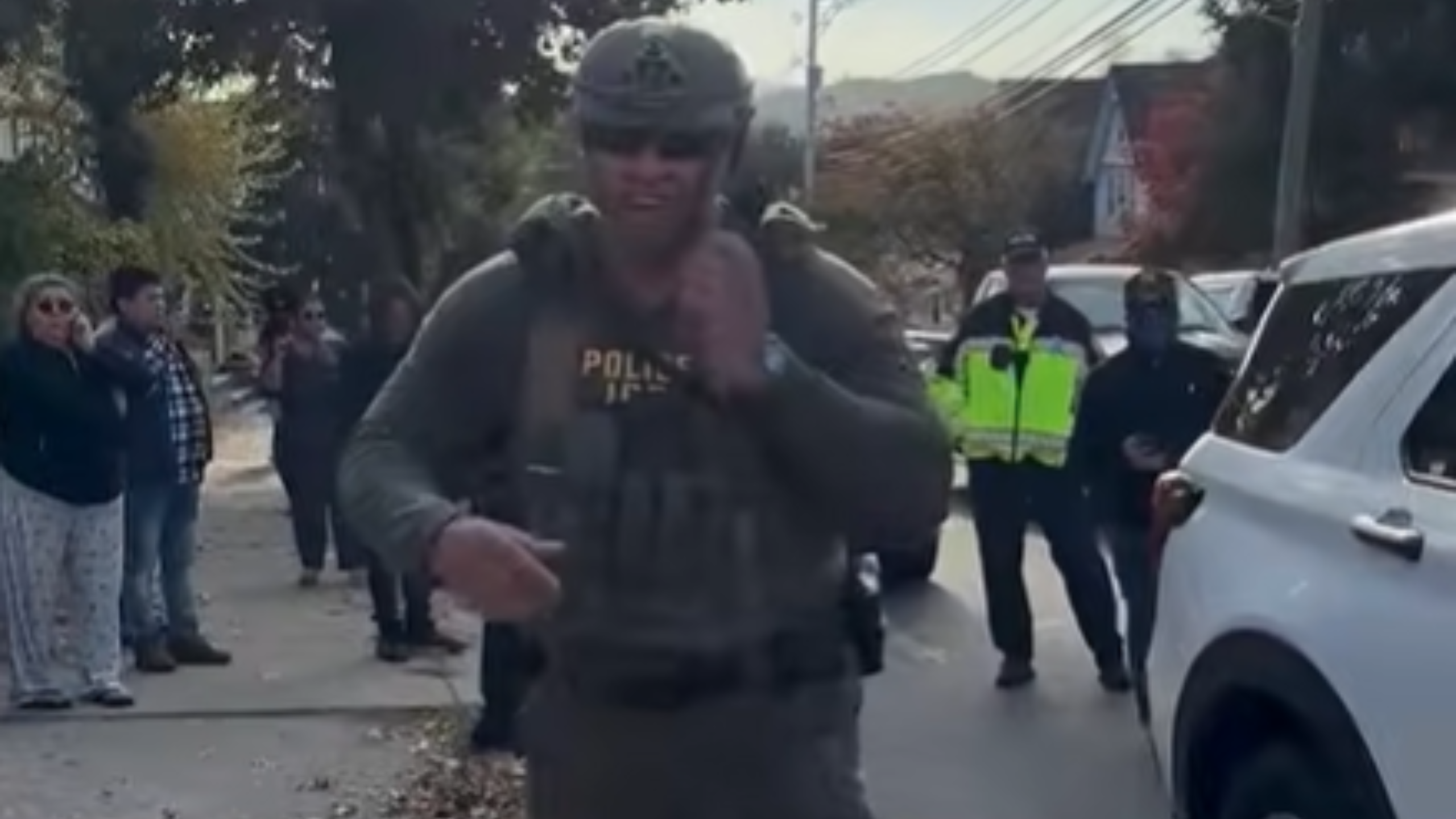
A woman who recorded the Oct. 29 operation said an agent shoved her; DHS denied an assault, while the mayor defended local officers’ crowd-control role.
MORRISTOWN, NJ – An Oct. 29 immigration enforcement operation on Abbett Avenue has drawn conflicting accounts of an encounter between a federal agent and a woman recording the scene, along with questions about the role of Morristown police.
Alexis Brown told Morristown Patch that an agent physically pushed her as she moved toward other bystanders. Patch published its report Oct. 30 and described cellphone footage of the encounter.
Brown told the outlet she had stopped after seeing the operation and was recording as a concerned witness. She said she had not understood that a perimeter had been established and intended to discuss her legal options with a lawyer.
The Department of Homeland Security disputed the assault allegation in a statement reported by Morristown Green. DHS said agents were conducting a targeted operation connected to an ongoing federal investigation and accused a bystander of refusing lawful commands. The agency maintained that officers controlled the situation safely.
DHS also described the operation’s target as an MS-13 member from El Salvador. That description is the agency’s allegation; it is not an independently established finding in this report.
Why local police were there
Mayor Tim Dougherty said town officers responded to a federal request for crowd control at 8 Abbett Ave., according to Morristown Green. He said the town had no advance notice of the operation and that local officers were assigned to protect residents and bystanders rather than conduct immigration enforcement.
Dougherty defended their conduct as appropriate and professional. Brown told Patch that clearer directions about the perimeter could have prevented the confrontation, while also crediting a local officer with helping de-escalate the exchange afterward.
What state rules say
New Jersey’s explanation of the Immigrant Trust Directive says state and local officers generally may not participate in civil immigration enforcement or stop, question, search or detain someone solely because of immigration status. It also identifies exceptions, including enforcing state criminal laws and complying with valid judicial warrants or court orders.
The state codified the directive in legislation signed March 25. Whether a particular police response complies with those requirements depends on its circumstances; the accounts reviewed do not establish a legal determination about this encounter.
The state’s Know Your Rights information hub provides links to legal resources and a portal for reporting interactions with immigration authorities.