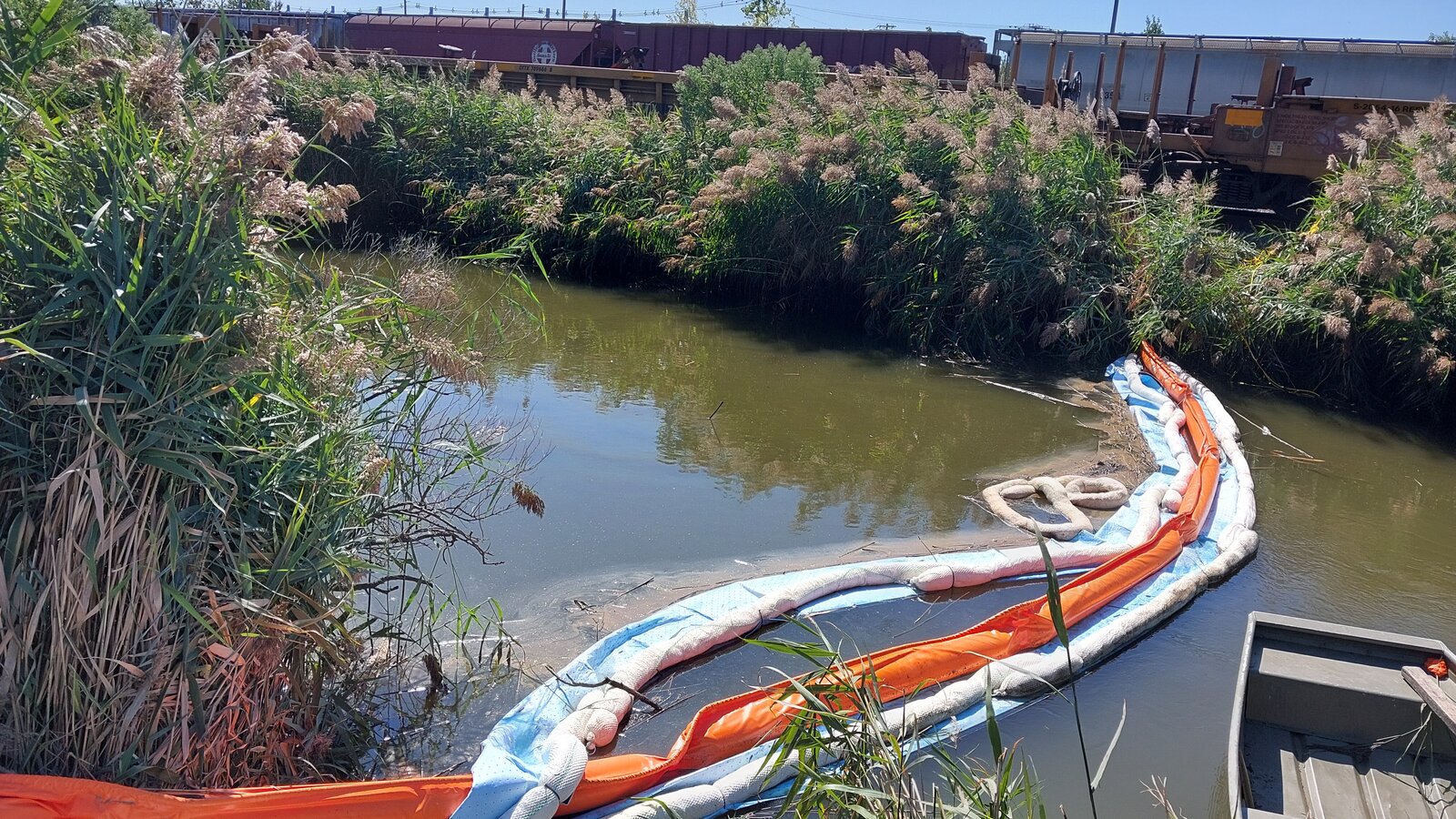
Two failed valves at the Equinix Data Center sent No. 2 diesel through a storm drain and into a Secaucus creek on Sept. 11. Regulators said their latest inspections found no impact to the Hackensack River’s main channel, drinking water or wildlife.
SECAUCUS, NJ – About 5,000 gallons of No. 2 diesel fuel escaped from a storage system at Equinix’s NY2 data center on Friday, Sept. 11, entering a storm drain and a small tidal tributary of the Hackensack River, according to the New Jersey Department of Environmental Protection.
NJDEP said state inspectors and the U.S. Coast Guard had not observed impacts to the Hackensack River’s main channel or to wildlife. The department also said there are no drinking-water intakes in the affected area. Those findings describe what officials had observed during the initial response; they are not a final assessment of the tributary, its sediment or the adjacent wetlands.
Equinix said the discharge began at about 7:30 p.m. at its facility at 275 Hartz Way, when two valves used during routine filtration of stored fuel failed mechanically. The company said its operations team detected and stopped the leak, hired environmental contractor Clean Harbors and contacted the Secaucus Fire Department. Local firefighters then notified NJDEP and the Hudson Regional Health Commission.
The state’s 5,000-gallon estimate is lower than the 5,500-gallon preliminary figure released by Secaucus Mayor Michael Gonnelli shortly after the spill. The estimates should not be treated as a measure of how much diesel reached open water. NJDEP said only that a significant portion entered a storm drain and that responders removed much of the material during the first weekend. Officials have not publicly specified how much fuel remained inside the drainage system, how much entered the creek or how much pure diesel was ultimately recovered.
What failed and where the fuel went
Equinix described the cause as a mechanical failure involving two valves used to filter stored fuel. That explanation refined an earlier description from Seacaucus Mayor Gonnelli, who called the malfunction a computer glitch. NJDEP said on Sept. 15 that it had not independently determined the specific cause of the discharge.
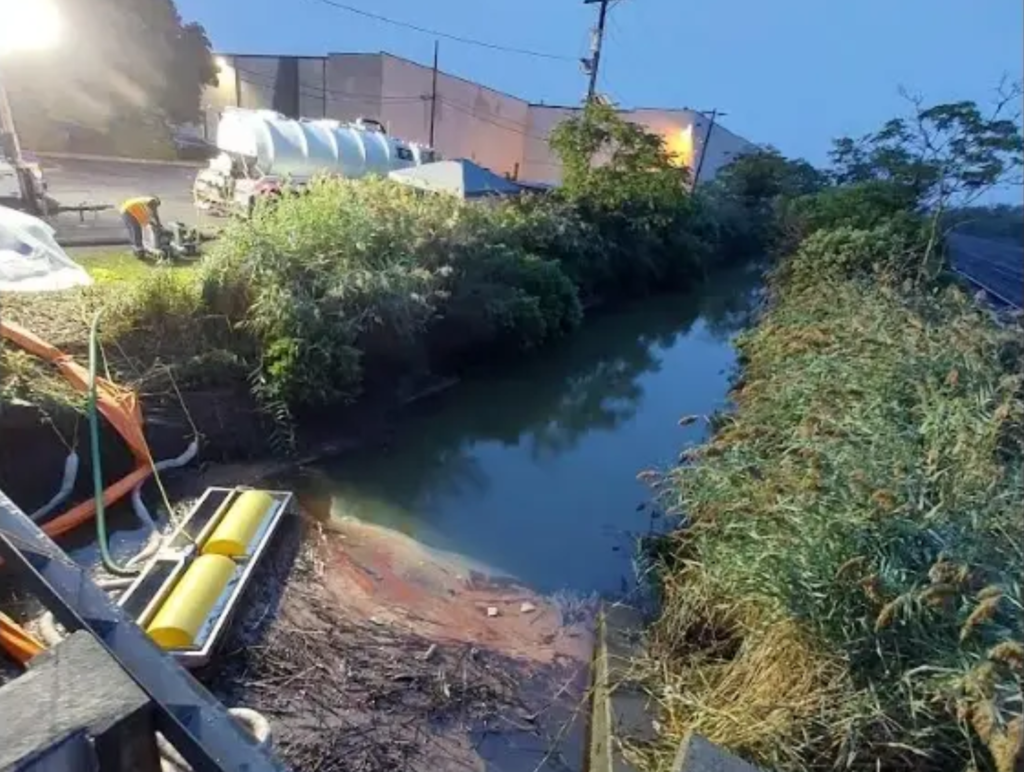
The affected waterway has been identified locally as Anderson Creek, although NJDEP’s public statement described it as a small, unnamed tributary. The creek flows through the Secaucus Meadowlands to the Hackensack River. Fuel moved from the data center property into a storm drain before reaching the tributary, according to the state.
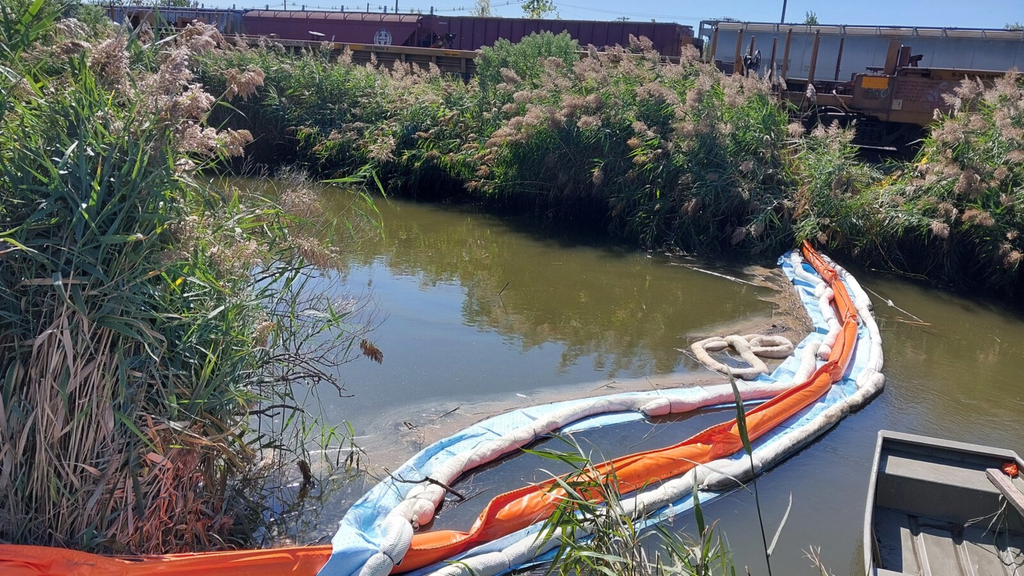
Clean Harbors placed protective booms near the creek’s mouth and used vacuum trucks and oil-absorbing pads to recover fuel and contaminated water. Recovered material was removed for disposal. NJDEP and the Coast Guard monitored both the boom and the Hackensack River while that work continued.
Mayor Gonnelli said approximately 3,500 gallons had been removed by Monday, Sept. 14. Public reports do not establish whether that number represented diesel alone or a mixture of fuel and water, so it cannot be subtracted directly from the total spill estimate.
In a statement Equinix said it regretted the incident and was preparing a full response report intended to prevent another release. No final report was publicly available as of Sept. 21.
Why a data center stores diesel
NY2 is a colocation data center, meaning it houses computing and networking equipment for multiple customers. Data centers require uninterrupted electricity for servers, cooling equipment, pumps and other systems, so facilities commonly maintain diesel generators and on-site fuel for backup power.
Equinix’s official NY2 facility page lists 131,040 square feet of colocation space, redundant generators and at least 30 hours of generator operation at full load. The page does not disclose the number or capacity of the facility’s fuel tanks, and it does not identify the equipment involved in the Sept. 11 spill.
Equinix has not said whether the failed valves were controlled electronically, when they were last inspected or how long fuel flowed before employees stopped it. The company also has not disclosed whether alarms, secondary containment or automatic shutoffs functioned as designed.
Cleanup responsibility and possible penalties
NJDEP identified Equinix as the responsible party and said the company had retained a Licensed Site Remediation Professional, or LSRP, to oversee longer-term work. Under New Jersey’s Spill Compensation and Control Act, a party responsible for discharging a hazardous substance can be held liable for cleanup and removal costs without regard to fault.
That liability is separate from a penalty. As of the state’s latest public update, NJDEP had not announced a fine, enforcement order or natural resource damages claim. It also had not said what sampling would be required to close the case.
Natural resource damages address injury to public resources and the cost of restoring or replacing them, beyond the immediate expense of collecting spilled material. The U.S. Environmental Protection Agency’s primer explains that trustees may assess injuries to water, sediment, habitat and wildlife after a release. Hackensack Riverkeeper has urged the state to pursue such a claim, but that request does not mean NJDEP has determined that compensable damage occurred.
Spills can be reported to the state’s 24-hour NJDEP hotline and to the federal National Response Center. NJDEP makes incident and complaint reports available through its official DataMiner directory, although a complete incident report for this spill was not available through the public-facing materials reviewed for this article.
A river already undergoing federal cleanup
The spill occurred along a river system with a long history of industrial contamination. In September 2022, EPA added the lower 18.75 miles of the Hackensack River, from the Oradell Dam to near Newark Bay, to the federal Superfund National Priorities List.
EPA cited more than two centuries of industrial activity and contaminated sediment containing arsenic, lead, chromium, mercury, polychlorinated biphenyls and polycyclic aromatic hydrocarbons. The agency also noted that the lower river supports more than 8,400 acres of wetlands and habitat for more than 30 threatened or endangered species. The federal listing does not establish that the Equinix spill entered the main river or added to its sediment contamination. It explains why a petroleum release into a connected Meadowlands tributary receives close scrutiny.
The EPA listing announcement and NJDEP’s Lower Hackensack cleanup page describe the larger investigation and cleanup process. The Sept. 11 diesel response is a separate case unless regulators later connect it to that work.
What remains unanswered
The leak has been stopped, and cleanup was continuing in the state’s latest public update. Several material questions remain:
- How much diesel reached the tributary, and how much remained in the storm-drain system?
- What volume of diesel, contaminated water and absorbent material was ultimately recovered?
- Did sampling find petroleum in creek sediment, wetland soil or groundwater?
- What precisely caused both valves to fail, and did any alarm or secondary-containment system also fail?
- What corrective work will Equinix complete before returning the fuel system to normal operation?
- Will NJDEP issue a violation, civil penalty, cleanup directive or natural resource damages claim?
NJDEP said it would continue coordinating with Equinix, Clean Harbors and the company’s LSRP on a thorough cleanup. Equinix said it was completing an incident response report. Until regulators publish closure data and the company releases its findings, the final environmental impact and the full cost of the spill cannot be determined from the public record.