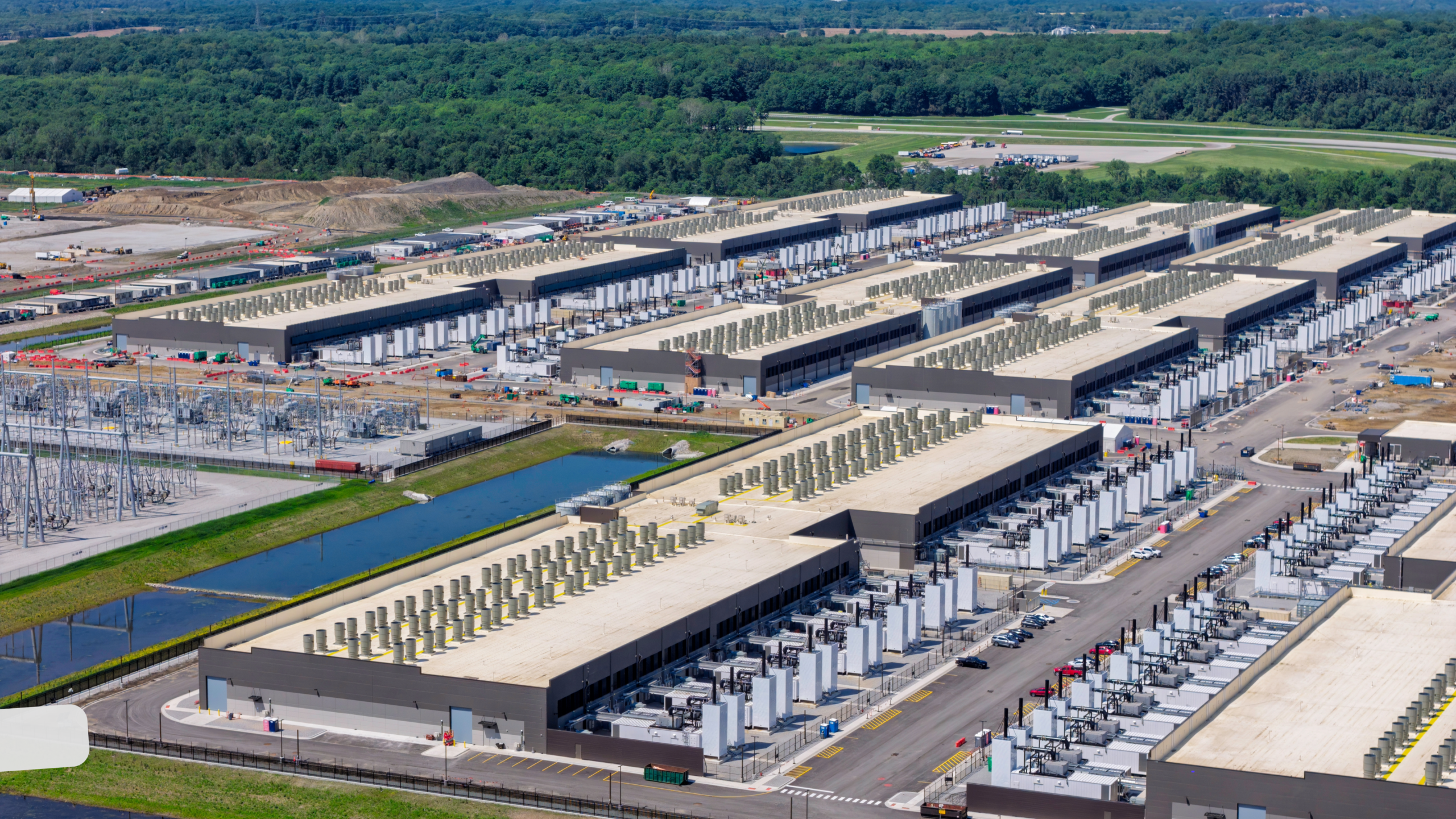
The new law creates public reporting deadlines, while state guidance urges towns to negotiate infrastructure, fire-safety and community investments before approving projects.
TRENTON, N.J. – Data centers operating in New Jersey will have to report how much energy and water they use under a law signed August 27, giving residents and local officials a new way to measure the demands of facilities built to store and process digital information.
The law, S3379/A4096, requires owners or operators to file reports with the Board of Public Utilities twice a year. Facilities that have operated for at least one year must submit their first report within three months. Other data centers have six months. The law took effect immediately.
Each report must identify the facility, its owner or operator, its address and when it began operating. It also must disclose total energy use, electricity used by information-technology equipment, on-site and backup power systems, total and peak daily water use, water sources and relevant utility or water-service agreements.
The BPU must publish the core information online within 30 days of receiving it. Data centers receiving a state financial incentive must provide additional efficiency and sustainability measurements, including power-usage effectiveness, renewable-energy use and water-usage effectiveness. Those added performance metrics are confidential at the facility level and may be released only in anonymized aggregates of at least five facilities.
The reporting mandate initially lasts three years from a facility’s first report. The BPU then must decide whether to continue it permanently. A health care facility’s internal data operation is excluded unless it functions as a commercial processor or colocation center for an unaffiliated entity.
The reporting law is one part of a wider state framework. A separate law signed in July directed the BPU to create a distinct rate class for large data centers and cost-allocation rules intended to prevent residential and other utility customers from subsidizing the grid upgrades those facilities require.
For municipalities, the more immediate document may be an August 25 Department of Community Affairs guidance notice. It urges local governments to assess a proposed data center’s effect on roads, water and sewer capacity, electric infrastructure, emergency communications, fire protection, noise, light and pollution before negotiating a community benefits agreement.
The guidance says towns should consider requiring developers to pay for improvements made necessary by a project, including road reconstruction, water and sewer work, firefighting equipment, emergency-response training and stormwater controls. It strongly encourages public hearings even when they are not otherwise required by law.
Community benefits agreements are legally binding contracts, but the new guidance does not require every data center project to have one. Projects receiving certain large state incentives through the Aspire or Emerge programs generally face separate community-benefit requirements, including a public hearing, an advisory committee and annual reports.
The state also reminded towns to scrutinize proposed property-tax abatements. Data centers in redevelopment areas may qualify for payment-in-lieu-of-taxes agreements, but the guidance warns that an overly generous incentive can shift the cost of municipal services to other property owners. Fire protection, emergency medical response, inspections and emergency management all carry continuing costs after construction ends.
The law does not approve a specific data center in Morris County or elsewhere. Local land-use boards and governing bodies will still decide individual applications under existing planning and redevelopment law. For residents, the documents to watch are site-plan applications, utility-impact studies, redevelopment agreements, tax-abatement ordinances and any proposed community benefits agreement.