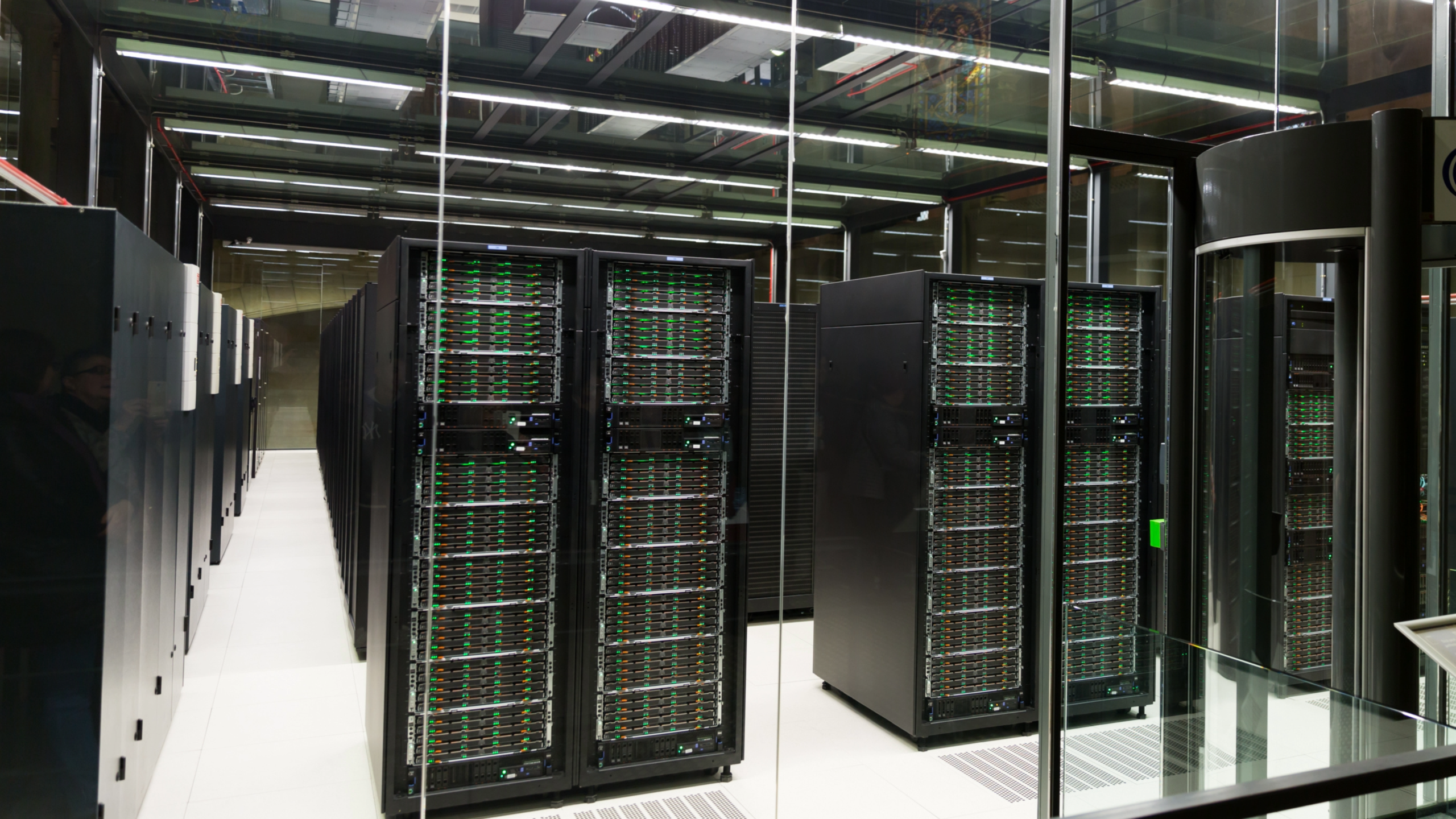
A $75 million private gift and $25 million SHI investment support the project, which will connect eight research universities and the state’s community college network.
NEW JERSEY – New Jersey will contribute $25 million to a shared supercomputer initiative backed by more than $125 million in announced public and private support, Gov. Mikie Sherrill said Oct. 20.
The New Jersey Supercomputer Initiative, or NJSCI, will provide computing resources for university research, education and other users across the state. The project’s website lists an early 2027 target for the system to go live.
The state announcement identifies a $75 million personal gift from NVIDIA co-founder Chris Malachowsky and his wife, Melody, a $25 million investment from SHI International, and the state contribution, appropriated in the fiscal 2026 budget.
The private gift comes from the Malachowskys personally. The announcement does not describe it as a $75 million corporate contribution from NVIDIA.
Which institutions will participate
Founding partners include Kean University, Montclair State University, the New Jersey Institute of Technology, Princeton University, Rowan University, Rutgers University, Seton Hall University and Stevens Institute of Technology, along with the New Jersey Council of County Colleges.
Participating institutions plan annual contributions to the initiative’s budget. The state says additional participation pathways will be announced in 2027.
The project is expected to double the aggregate supercomputing capacity available across New Jersey’s research universities. That is the initiative’s projection, rather than a measurement of an operating system.
NJSCI, an independent nonprofit, is expected to administer the resource beginning in 2027. Its implementation outline describes work on governance, access, research priorities and education programs.
What the computer would be used for
A shared system would allow institutions to run demanding computing tasks that exceed the resources available to an individual laboratory or classroom.
In its announcement about joining the initiative, NJIT described flood research combining drone mapping, hydraulic models and AI-assisted monitoring. It also described opportunities for students to train and run AI models at a scale beyond laptops or free cloud services.
The initiative’s proposed research areas include disease research, environmental modeling, infrastructure and materials science. Its education plans include coursework, faculty training and apprenticeship pathways.
Rowan University said a doctoral student participating in the launch discussed using AI to identify patterns in biological data and accelerate drug-design research.
These are intended uses and research goals. The launch announcements do not establish that the system has already produced medical discoveries or reduced flood losses.
Who will operate it
Somerset County-based SHI International says it will design, build, host and operate the computing environment in its existing New Jersey facilities.
The company’s project announcement describes a phased expansion based on demand, incorporating energy-efficient design and advanced cooling. SHI will also handle integration and day-to-day operations.
The next public milestones are the planned early 2027 launch and details about how additional institutions and users can participate. The initiative’s website provides updates as the system and its access arrangements are developed.