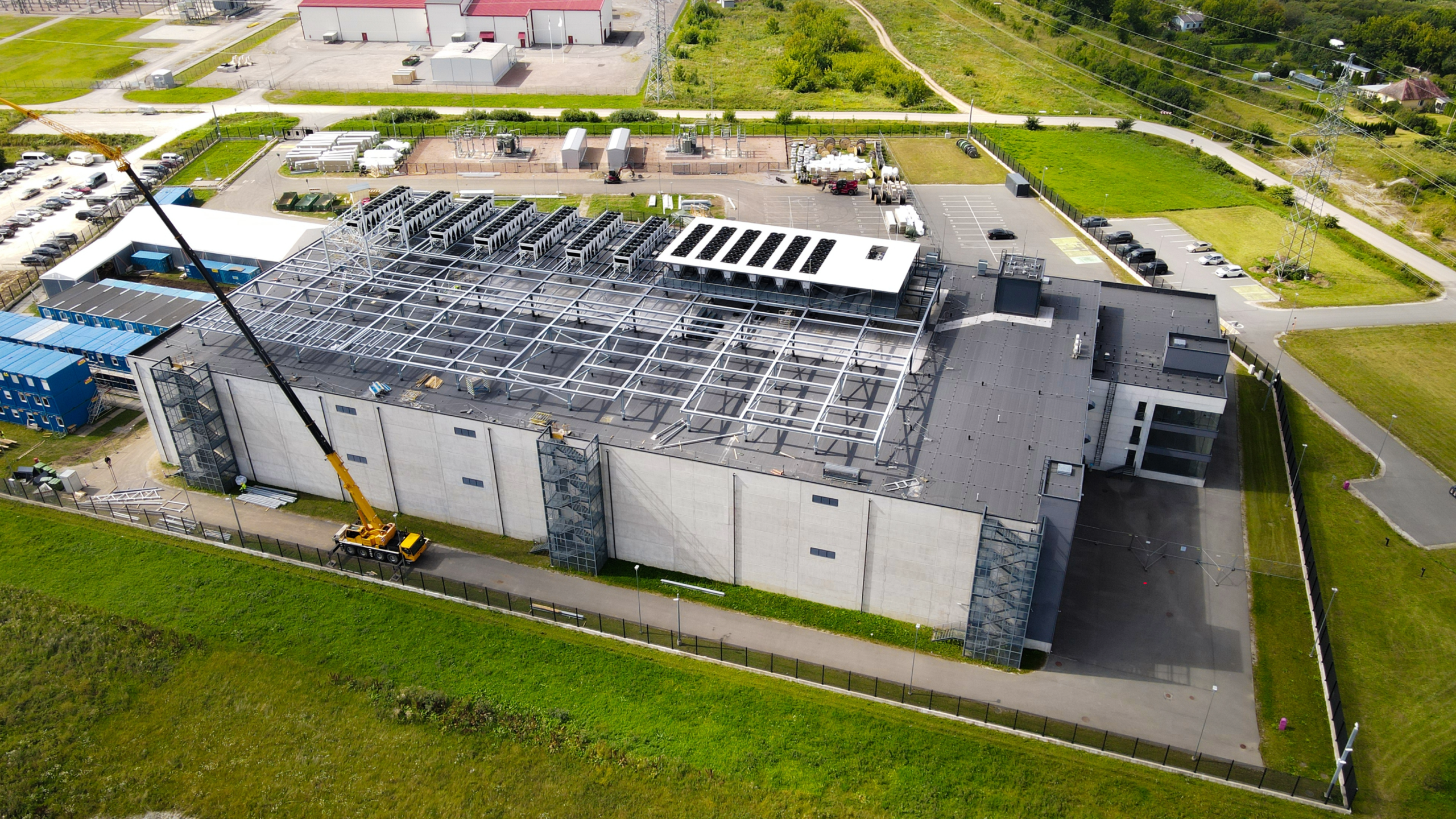
The ordinance targets facilities drawing more than 50 megawatts and directs the Planning Board to recommend permanent rules by June 30, 2027.
MAHWAH, NJ – The Mahwah Township Council voted 6–0 on Oct. 26 to prohibit large data centers in every zoning district while the township studies their effects on electric service, water supplies and surrounding neighborhoods, according to Bergen TV’s account of the meeting.
Ordinance 2105, included in the township’s official meeting packet, defines a hyperscale data center as a facility with a total electric load greater than 50 megawatts. It directs the Planning Board to deliver its findings and recommendations by June 30, 2027.
The measure addresses the size and concentration of a facility’s demand for utilities. Its stated concerns include the capacity of the electric system serving Mahwah, cooling-water requirements, backup generators and the possibility that infrastructure costs could affect other utility customers.
The ordinance says the township does not have a current engineering determination of available capacity on local electric circuits, feeders and substations, or how large new connections would affect reliability and customer rates. Those questions are among the subjects assigned to the Planning Board’s study.
How the restriction would work
The definition of a data center covers facilities that store, manage, distribute or process electronic information, including server farms, cryptocurrency mining and blockchain processing.
Related buildings can be counted together when determining whether a project crosses the electricity threshold. That provision covers shared infrastructure and phased development, limiting the ability to divide a larger campus into separate applications to avoid the restriction.
Existing business computing operations that do not meet the hyperscale definition are protected by the ordinance’s limitations. The text also recognizes exemptions where federal or state law, or the jurisdiction of the New Jersey Board of Public Utilities, controls municipal regulation.
During the meeting, Council President Robert M. Ferguson III and Councilman Jonathan S. Wong said the restriction would also apply to the Crossroads redevelopment property, Bergen TV reported. Their statements followed an earlier Planning Board discussion in which the board’s attorney had described that property as outside the ordinance’s reach.
The Crossroads redevelopment plan provides that terms it does not define rely on definitions in the township zoning code. The council members cited that provision in explaining their interpretation, according to Bergen TV.
A broader increase in electricity demand
Data-center growth is also being studied nationally. A Lawrence Berkeley National Laboratory report published in June 2026 estimated that data centers could account for 11.8% of U.S. electricity use by 2030, with scenarios ranging from 9.5% to 15.3%.
Those are national projections based on equipment, operating and cooling assumptions. They do not establish the effects of a particular development on Mahwah’s power system or electric bills, which are questions the local study is intended to examine.
The ordinance calls for recommendations on water use, noise, backup generation, stormwater, construction traffic, tax treatment and eventual site restoration. The board is also to consider whether hyperscale facilities should be allowed anywhere in the township under permanent rules.
The text provides for the ordinance to take effect 20 days after final passage, adoption and publication according to law. The June 30 study deadline is not written as an automatic expiration date for the prohibition.