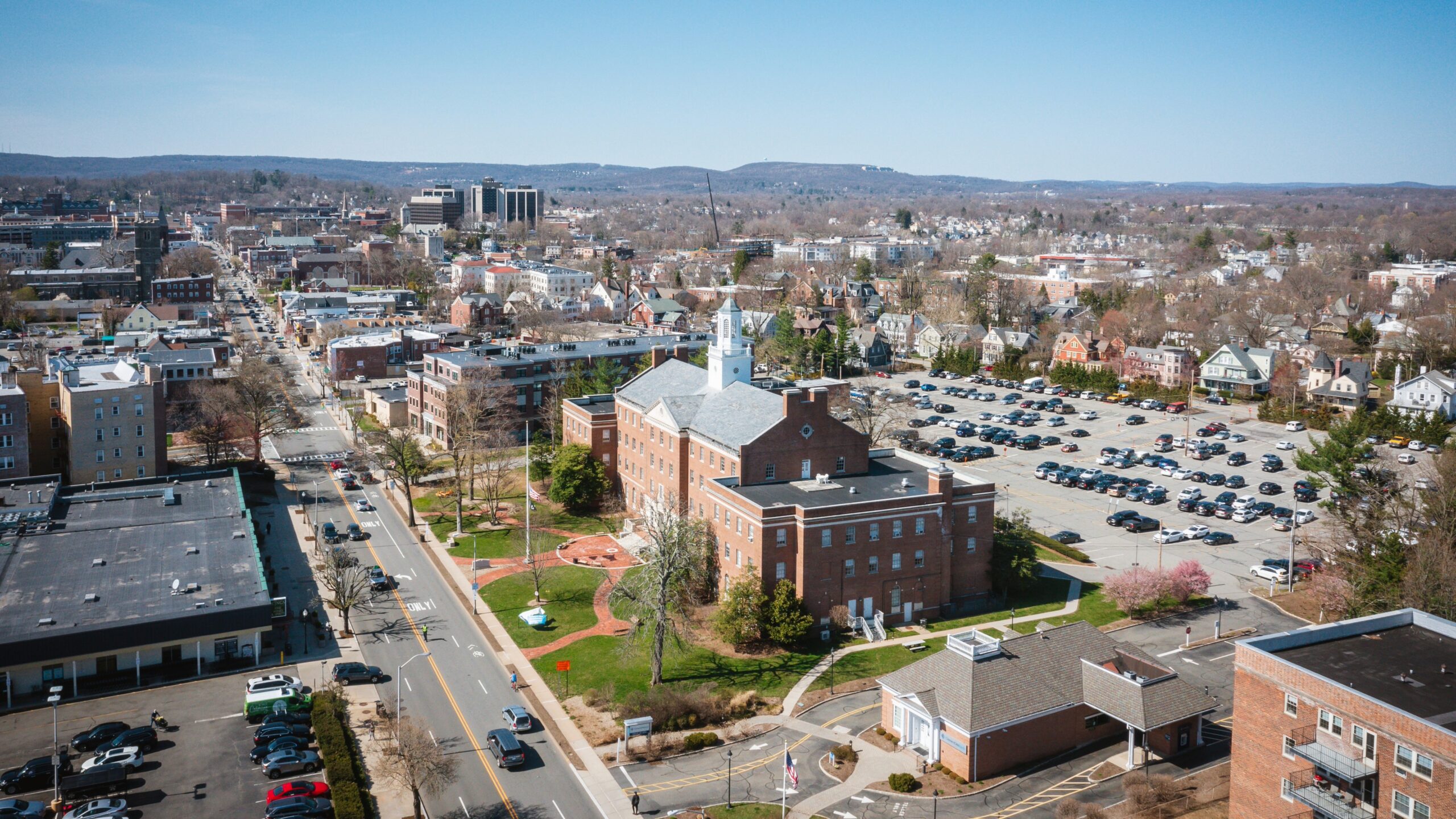
There are more than 7,000 parking spaces across Morristown, but rising rates, permit waitlists, time limits and apartment fees shape who can actually use them.
MORRISTOWN, NJ – Morristown’s parking pressure is not explained by the number of spaces alone. Public sources list thousands of spaces across the Morristown Parking Authority, Headquarters Plaza and Morristown Station, but those spaces are divided by ownership, price, permit status, hours of use and whether a driver is a resident, renter, employee, commuter or visitor.
The practical result is a parking system that can look large on paper while still leaving residents and commuters with difficult daily questions: whether their apartment includes parking, whether they can get a monthly permit, whether the train station allows overnight parking, whether street parking is available near their address and whether a garage fee changes what they can afford in rent.
The problem is that each parking supply answers a different question. A restaurant visitor looking for two hours downtown, a commuter leaving a car near the train, a renter trying to park overnight and an employee seeking a monthly permit are not competing for one simple pool of open spaces.
How many parking spaces Morristown has
The Morristown Parking Authority reported 3,707 total spaces as of September 2024, including 831 spaces in nine parking lots, 710 metered on-street spaces and 2,166 spaces in five parking structures. The largest MPA garages are DeHart Street Garage, 757 spaces, Dalton Garage, 677 spaces, and Ann-Bank Garage, 610 spaces.
Those municipal spaces sit alongside private and transit parking. Headquarters Plaza Parking Deck has more than 3,000 covered spaces, according to the Morristown Partnership, and is managed by LAZ Parking. Morristown Station has two NJ Transit-owned lots: Lot 1 on Morris Street, with 60 standard spaces and three accessible spaces, and Lot 2 at 10 Lafayette Avenue, with 407 standard spaces and eight accessible spaces.
Why monthly permits remain limited
The MPA’s own permit page states that most of its facilities are at capacity and waiting lists are maintained. The authority says its waiting lists for monthly permits are long, though it occasionally releases permits, and it directs users to the MPA Customer Portal to join a waiting list when a preferred permit is unavailable.
MPA board materials show that the issue extends beyond ordinary turnover. In February 2025, the authority said a parking consultant had determined that Ann-Bank Garage and Dalton Garage could not accommodate new parking demand while also meeting future contractual obligations, even though those garages could handle existing demand at that time.
The same resolution transferred people on waiting lists for Ann-Bank and Dalton full-access and day passes to temporary waiting lists. The resolution said temporary permits would be issued month to month and could be revoked with one month’s notice, with the authority stating that it was trying to accommodate current demand that “may not be accommodated in the future due to prior contractual agreements.”
What the 2026 rates show
The 2026 fee schedule also shows how cost varies by facility. Monthly MPA permits now list at:
| Facility | Monthly permit rate |
|---|---|
| Ann-Bank Garage | $85 |
| Dalton Garage | $120 |
| DeHart Garage | $130 |
| Mall Lot | $85 |
| Lot 8 | $55 |
| Lot 10 | $85 |
| Lot 14 | $20 |
| Lot 15 | $20 |
| Early Street Deck | $85 |
| Vail Mansion Deck | $85 |
The same schedule lists Lot 3 as closed for construction, sets surface lots and decks at $1.50 per hour, and sets the maximum gated-facility transient charge at $30 for over 12 hours up to 24 hours, with fees continuing to accumulate after 24 hours.
Lot 15 is also useful context for residents asking where a car can stay overnight. In February 2025, the MPA said Morristown had experienced increased parking demand from growing residential, commercial and recreational activity, and that its consultant found Lot 15 could accommodate residential parking demand after 6 p.m. and before 8 a.m. The authority also said eligibility for those permits would be determined through the applicable waiting list.
Why train station parking is not simple overflow
For commuters, the train station adds another layer. NJ Transit lists Morristown Station Lot 1 as reserved permit parking, with permits required in the evenings, nights and weekends. Lot 2 is listed as daily and permit parking, but NJ Transit says users must pay in the evenings, nights and weekends. Both lots are listed at $7 per day or $120 per month for residents and nonresidents.
NJ Transit also cautions that parking information is subject to change and recommends contacting the local parking operator to verify rates, hours and other details before parking. That caveat matters because Morristown Station parking is managed locally, even though the lots are NJ Transit-owned.
That means the train station is not a simple overnight overflow option for downtown residents. A driver using Lot 1 needs the right permit during the listed time windows, while a driver using Lot 2 must pay during nights and weekends, according to NJ Transit’s station page.
How parking changes the cost of renting
For renters, parking becomes part of housing affordability. Current Morristown listings filtered for apartments with washers and dryers show some units around $2,600 to $3,000 per month, with Zillow repeatedly noting that fees may apply. A renter comparing units in that range has to ask whether parking is included, optional, unavailable or charged separately.
Building rules vary. Modera 44 says garage parking starts at $135 per vehicle per month, with EV charging an additional $100 per vehicle per month. Metropolitan at 40 Park says it has a controlled-access garage, but parking is offered for an additional monthly fee, guest parking is not available and EV charging stations are not offered. Sofi at Morristown Station listings show in-unit washers and dryers, but direct prospective renters to contact the property for parking details.
Those examples do not describe every building in Morristown, but they show why the same rent can mean different real monthly costs. A renter with a $2,800 apartment and a $135 parking charge is effectively budgeting $2,935 before utilities, pet fees, storage, insurance, EV charging or other building charges. If EV access adds another $100, the parking-related cost can reach $235 per month at that building.
Private monthly parking may fill some gaps, but it is separate from the municipal permit system. A ParkWhiz listing for LAZ Parking at 52 Headquarters Plaza Garage showed covered monthly self-parking at $185, with listed operating hours of 6 a.m. to midnight. Drivers would still need to verify current availability, access rules and overnight terms directly with the operator before relying on it as a residential parking solution.
What street parking can and cannot solve
Street parking is the least dependable substitute. The town says residential parking stickers allow long-term non-metered parking only on the street for which the sticker was issued, past the two-hour restriction, and do not guarantee parking. Residential permits are limited to three per dwelling unit, and applicants must provide documentation, including a driver’s license and vehicle registration matching the Morristown address.
The town also offers hardship permits for residents who can show special circumstances, including addresses with no parking available, but the application requires supporting documents and says approval depends on whether the hardship is genuine and whether there is adequate parking to grant the request.
On-street capacity is limited by design. The MPA reported 710 on-street metered spaces, including 19 spaces with 30-minute limits, 682 spaces with two-hour limits and nine spaces with 18-hour limits. The authority said on-street meters make up about one-fifth of the parking system, and residential parking zones near high-activity areas are enforced separately.
That structure explains why street parking can work for some residents but cannot reliably replace an apartment space or monthly garage permit. It depends on the address, permit eligibility, street-specific rules, visitor demand, enforcement hours and whether the resident needs overnight parking, commuter parking or both.
The MPA’s own creation of after-hours and residential-use permit options supports the same point. Public parking spaces may exist nearby, but their usefulness depends on the category of use: daytime employee parking, short-term customer parking, commuter parking, overnight residential storage or visitor turnover.
The issue is also tied to downtown activity. The MPA’s annual report said garage revenue, lot and deck revenue and on-street meter revenue all increased from 2022 to 2023, and it projected more revenue growth tied to downtown activity, new development and parking rate changes.
For Morristown residents, the useful question is not only how many spaces exist. It is whether the right kind of space is available at the right time, under the right rule, at a cost that still makes the apartment, commute or visit practical.
Future parking discussions will likely have to separate those groups clearly: residents who need overnight storage, commuters who need predictable station access, employees who need monthly permits, visitors who need short-term turnover and renters whose housing budgets can change by more than $100 a month depending on where their car is allowed to sleep.