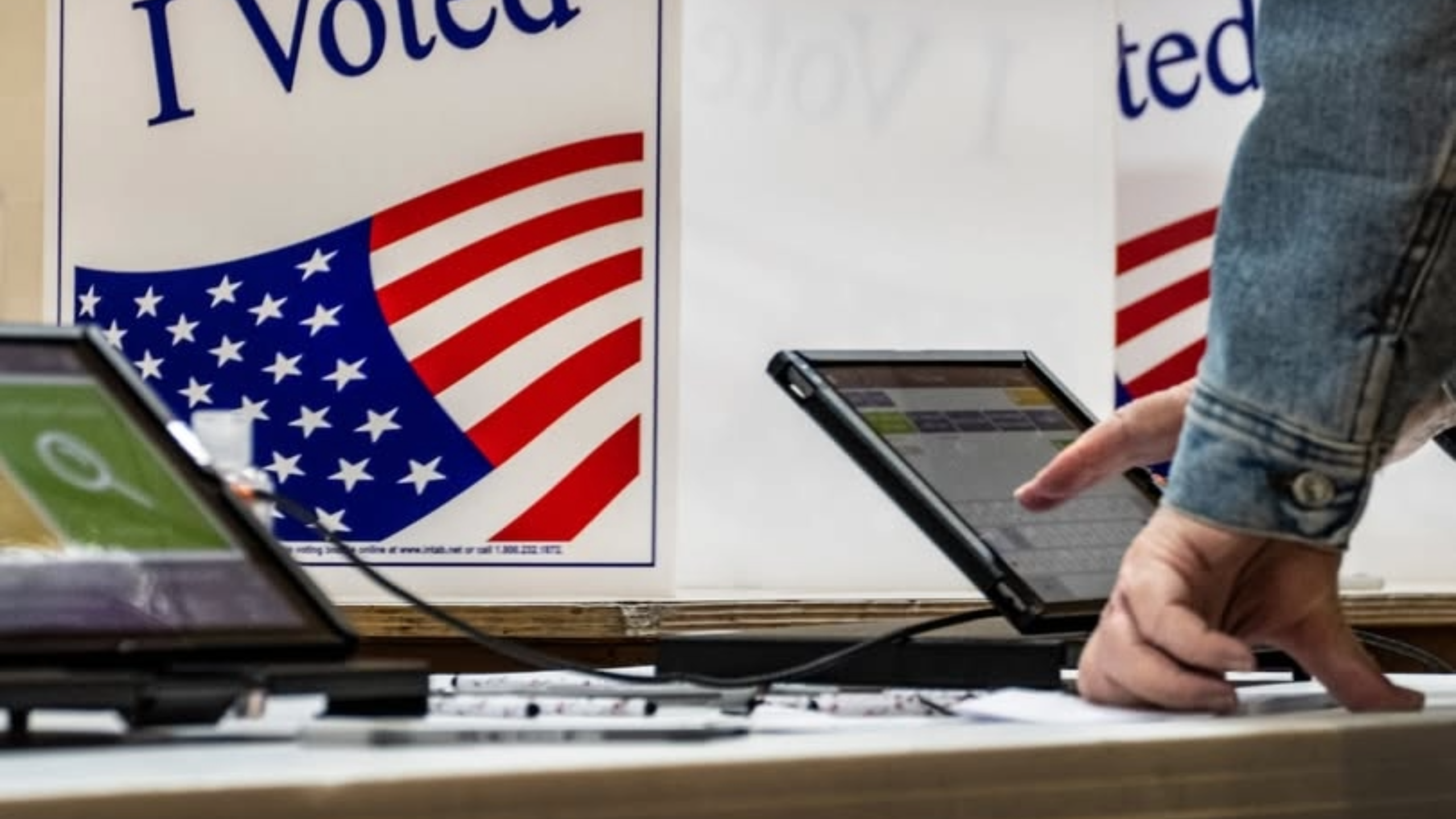
A software error in New Jersey’s Motor Vehicle System led to the registration of roughly 6,600 people who indicated that they were not U.S. citizens between June 2023 and June 2024.
Gov. Mikie Sherrill ordered an investigation, voter-roll removals and a vendor change; the state has not identified the elections involved, the number of ballots cast or the voters’ citizenship when they voted.
TRENTON, NJ – A software error in New Jersey’s motor vehicle system registered roughly 6,600 people to vote after they answered “no” when asked whether they were United States citizens, Gov. Mikie Sherrill said Tuesday in a statement provided to Morristown Minute.
The error operated from June 2023 through June 2024, during Gov. Phil Murphy’s administration, according to Sherrill. She said she learned about it last week and ordered her chief counsel to investigate. She also ordered election officials to remove residents who were erroneously registered. The MVC administrator she appointed has begun replacing the vendor responsible for the system, Sherrill said.
A preliminary state review found that fewer than 400 affected people who were newly registered for the first time later voted, Sherrill said. Her statement did not give the exact number, identify the elections, count the ballots cast or say whether any of those people became citizens before voting. It included no county breakdown, leaving the number of cases in Morris County unknown.
“Last week I learned that a serious software error in New Jersey’s Motor Vehicle System led to the registration of roughly 6,600 people who indicated that they were not U.S. citizens between June 2023 and June 2024, almost three years prior to my taking office. These individuals answered ‘no’ when asked on a keypad whether they were a U.S. citizen when applying for drivers’ licenses and identification cards, but through no fault of their own, the system registered them anyway.” – Statement from Governor Mikie Sherrill
The governor said those who voted were registered as Democrats, Republicans and unaffiliated voters. A party registration cannot show how someone voted in a general election. New Jersey’s secret ballot also prevents the state from identifying a voter’s candidate choices.
“I am appalled by the reckless failures that allowed this to happen and the lack of transparency shown by those in charge at the time. This failure didn’t occur under my watch, but accountability starts now. I am taking action to prevent anything like it from occurring in the future and make sure those responsible are held accountable.” – Statement from Governor Mikie Sherrill
What the preliminary count establishes
The affected applicants told the MVC they were not citizens. That fact separates this group from a person who deliberately claims citizenship on a voter-registration form.
The state’s “fewer than 400” figure describes people with a voting record, not the number of ballots. One person can participate in more than one election. The state has not said whether the record includes primary, general, municipal, school board or special elections. It also has not said whether it checked each person’s citizenship on the date of each vote.
Those facts are necessary before officials can determine how many illegal votes, if any, were cast. New Jersey law makes fraudulent voting by an ineligible person a crime. A registration record and voter history alone do not establish fraud.
The law addresses an official registration mistake separately. Under N.J.S.A. 39:2-3.2, an ineligible person registered through the MVC process is presumed to have been registered with official authorization and is not treated as having committed the false-registration crime, unless that person knowingly and willfully made a false statement. Sherrill said the 6,600 applicants answered the citizenship question truthfully.
That protection concerns the act of registration. The circumstances of any later vote require a person-by-person review.
The safeguards that failed
New Jersey began automatic voter registration at MVC offices on Nov. 1, 2018. Under the process announced by the MVC, eligible license and identification-card applicants were registered unless they opted out. The MVC sent their information electronically to the Department of State, and county commissioners reviewed the applications for the statewide voter-registration system.
The law in effect during the error period limited automatic registration to an “eligible applicant.” It required an eligibility notice, a warning about penalties, and a signed affirmation that the applicant met each voting requirement. The MVC also had to keep records from being transmitted when an applicant declined registration.
County election officials provided another control. N.J.S.A. 19:31-6.5 says a person is not considered registered until the county commissioner of registration reviews the application and accepts it.
Sherrill’s statement does not explain which data moved through the system after a person answered “no.” It is unclear whether the software changed or discarded the answer, skipped the eligibility affirmation, generated a contradictory record, or sent county officials a file that omitted the noncitizenship response. The state also has not explained what county reviewers could see when they accepted the applications.
IDEMIA’s role dates back years
The Wall Street Journal identified IDEMIA as the vendor whose software was supposed to prevent the registrations. The newspaper reported that the company did not immediately respond to a request for comment.
Public MVC records show that the vendor’s role in the customer-facing license system predates automatic registration. A 2015 MVC annual report said the agency, the State Board of Elections and MorphoTrust USA were moving voter-registration and organ-donor questions onto signature pads for customers to answer themselves. The company became part of IDEMIA in 2017.
The MVC’s 2023 annual report says the agency installed a new version of IDEMIA’s Enhanced Digital Driver License client software using web services and moved the system from Windows 7 to Windows 11. The reported registration error began in June of that year. A technical review would need to determine whether that deployment had any connection to the error.
The same annual report counted 928,575 online and in-agency voter-registration transactions in fiscal year 2023. It did not say how many were first-time registrations rather than updates.
Sherrill appointed Rosalie Johnson as acting MVC chair and chief administrator on her first day in office, Jan. 20, 2026. The governor said Johnson has started replacing IDEMIA. The statement gave no procurement schedule, transition plan, contract value or estimate of the replacement cost.
Stronger controls are scheduled for 2027
Murphy approved a revised MVC registration law, P.L. 2025, Chapter 204, on Jan. 12, 2026, eight days before Sherrill took office. It takes effect Jan. 1, 2027.
For REAL ID transactions, the law will use citizenship documents already supplied to the MVC to determine which records can enter the automatic-registration process. A document that conclusively shows noncitizenship will block a voter-registration offer. For standard licenses and identification cards, an applicant will have to affirmatively select or decline registration before finishing the transaction.
Those changes were not in effect during the 2023 to 2024 error. Sherrill did not say whether her administration will seek an earlier implementation date or add interim controls before January.
Earlier claims and separate criminal cases
The New Jersey Republican Party said on June 8 that county records obtained through public-records requests showed “hundreds” of noncitizens on voter rolls and at least 30 with voting histories. Its release did not publish the underlying records. The New Jersey Globe reported that day that the Division of Elections had not received the party’s list for confirmation.
The Sherrill administration has not said whether that inquiry led to discovery of the software error or whether the two groups overlap.
Federal prosecutors also charged four New Jersey residents in May with illegal voting and false statements. Those criminal complaints allege that the defendants falsely certified they were citizens. The allegations are separate from Sherrill’s disclosure, in which affected applicants answered “no” to the citizenship question.
Sherrill used part of Tuesday’s statement to criticize President Donald Trump’s election claims and record. The Wall Street Journal reported that the Department of Homeland Security recently told New Jersey officials a preliminary federal review had identified as many as 35,152 possible noncitizen registrations in the state. That broader estimate has not been confirmed as actual noncitizen registrations and uses a different scope from the state’s 6,600 software-error cases.
“As the Trump Administration tries to weaponize elections for political gain, I am ensuring we protect our elections. Let me be clear: Donald Trump has zero credibility on the issue of election integrity. For more than ten years, he has worked to undermine Americans’ faith in our elections by spreading lies about legitimate election results, attempting to overturn a free and fair election, encouraging an attack on our Capitol when he couldn’t accept the will of the voters, and defunding election security at the federal level.
“The difference is simple: when we find a problem, we don’t hide it, deny it, or invent conspiracies. We investigate it, we fix it, and we tell the public. That’s what accountability and good governance look like, and that’s exactly what my administration is doing.” – Statement from Governor Mikie Sherrill
Records the investigation should produce
The investigation can establish the precise software version involved, the date the defect began, why it ended in June 2024, and when IDEMIA, MVC managers, Department of State officials and county election offices first knew. Testing records, incident reports, change logs and communications would show whether officials detected the defect while it was active.
A complete accounting would give the final number of affected registrations, their county distribution, the elections in which each person participated, the total ballots cast and citizenship status on each election date. It would also explain how the state will notify people removed from the rolls and correct a removal if someone became a citizen after the MVC transaction.
Sherrill alleged “a lack of transparency shown by those in charge at the time,” though the statement named no former official who knew about the defect and cited no records showing prior knowledge.
Her administration has not announced a deadline for the investigation or committed to releasing its findings.
New Jersey residents can check their voter-registration status through the state voter portal. The registration deadline for the Nov. 3, 2026 general election is Oct. 13.