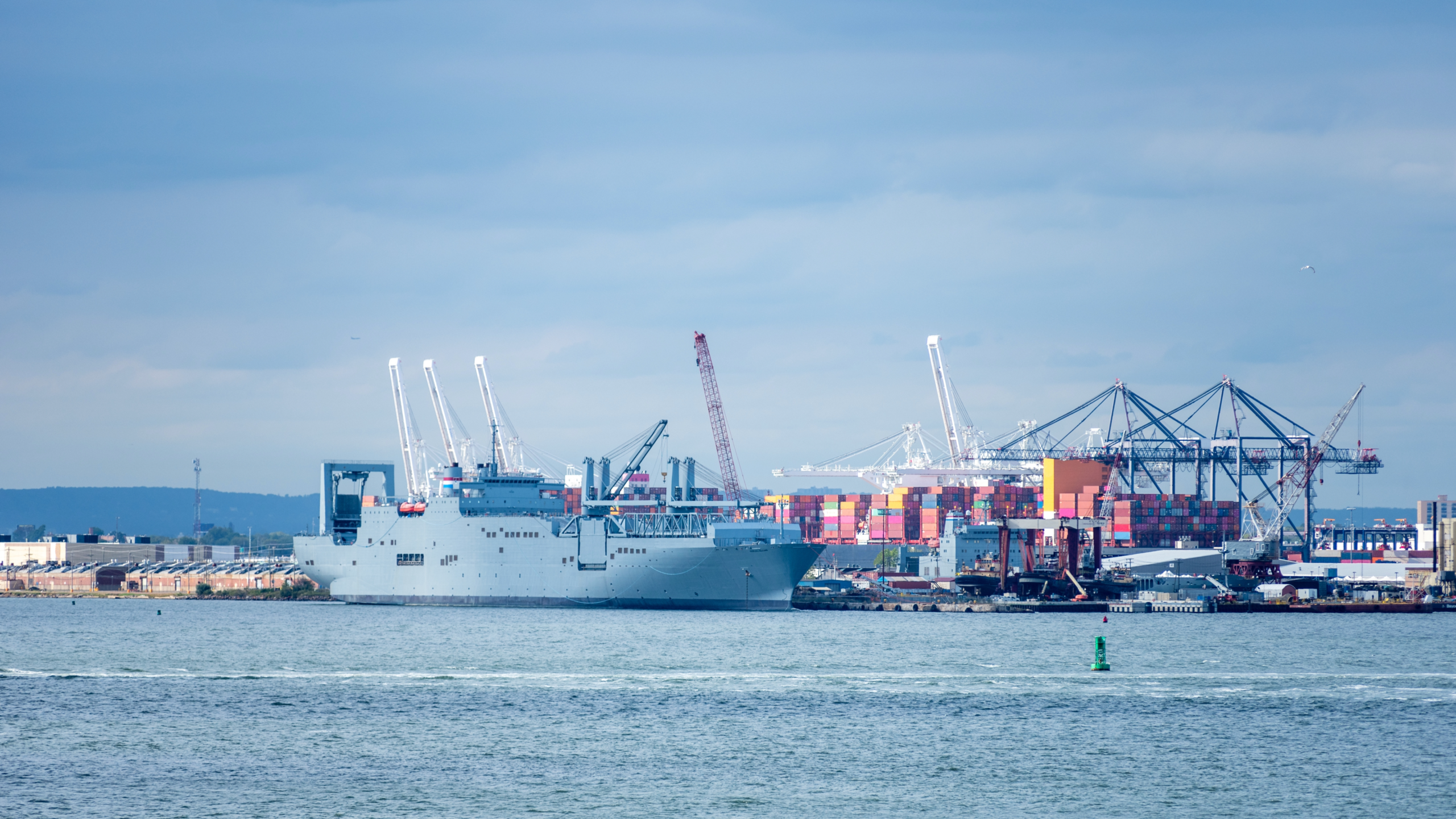
The governor says a Treasury license conflicts with a 2022 federal import ban, while a tanker that previously listed the New York–New Jersey harbor has no confirmed unloading port.
TRENTON, NJ – Gov. Mikie Sherrill urged New Jersey port and terminal operators on Nov. 2 to turn away tankers carrying Russian diesel, warning that businesses could face federal penalties if they help bring the fuel ashore. Sherrill argues that a Treasury Department license authorizing Russian diesel imports conflicts with a law Congress passed after Russia’s 2022 invasion of Ukraine.
“This letter serves to put ports and businesses on notice that purchasing or unloading the illegal Russian fuel currently bound for the east coast of the United States at the urging of the Trump Administration would likely subject businesses and individuals to harsh penalties, both civil and criminal. The Trump Administration’s authorization of Russian fuel imports directly conflicts with federal law. Specifically, in response to Russia’s invasion of Ukraine, Congress in April 2022 enacted the Ending Importation of Russian Oil Act (Russian Oil Act).” – Governor Sherrill’s Nov. 2, 2026 letter.
The Trump administration issued the license as part of an effort to lower diesel prices by increasing supply. Treasury has said the authorization complies with applicable law, according to The New York Times. The governor’s letter did not identify a terminal scheduled to receive the fuel or specify how New Jersey would block a shipment. A White House spokesperson did not immediately respond to the Times’ request for comment on Sherrill’s warning.
“New Jersey will not stand by while Donald Trump supports Vladimir Putin at the expense of Americans. Instead of lowering costs, he is helping finance Putin’s war against Ukraine and a global campaign of violence and terror that endangers U.S. servicemembers abroad. As a Navy veteran, I cannot let that stand unchallenged, and New Jersey’s ports shouldn’t be complicit. Every port and terminal operator, intermediary, and buyer is on notice: do not help bring illegal Russian diesel into New Jersey,” said Governor Sherrill.
A tanker’s destination remains uncertain
The Agioi Fanendes, a Malta-flagged tanker, loaded about 40,000 metric tons of ultra-low-sulfur diesel at Russia’s Baltic port of Primorsk in late October, Reuters reported, citing shipping data. U.S. Sen. Richard Blumenthal, D-Conn., said tracking data on Oct. 24 listed the Port of New York and New Jersey as the destination, with an estimated Nov. 7 arrival. The ship’s manager, Eastern Mediterranean Maritime, subsequently told Reuters that no discharge port or country had been finalized. On Nov. 3, the Times reported that the tanker was in the North Atlantic and had changed its listed destination to indicate that it was awaiting instructions.
The Times reported that Sherrill sent the warning to a dozen operators, including Kinder Morgan, IMTT and Phillips 66, and that the facilities receiving it were outside the Port Authority of New York and New Jersey’s port system. Kinder Morgan said it had received no notice of a Russian diesel shipment to its terminal. IMTT confirmed receiving the letter and declined to comment on it.
“Russia has since dispatched multiple diesel oil tankers to the United States, including at least one that may be headed for the New Jersey coast. The Russian Oil Act does not grant the President or Treasury Department blanket authority to waive these sanctions through licenses. Rather it provides a single avenue by which its prohibitions may be lifted short of repeal: the President must certify that, among other things, Russia has agreed to withdraw its forces from Ukraine. See Public L. 117-109 § 3. Of course, no such certification has been made-or could be made-thus far.” – Governor Sherrill’s Nov. 2, 2026 letter.
What the license and the law say
The Treasury Department’s Office of Foreign Assets Control issued General License 135 on Oct. 9. It authorizes transactions otherwise prohibited under two sets of federal sanctions regulations if they involve the sale, delivery, unloading or importation of Russian-origin diesel, including into the United States. The license runs until 12:01 a.m. Eastern time on April 7, 2027. It excludes debits from U.S. financial accounts held by Russia’s central bank, National Wealth Fund or Ministry of Finance.
President Joe Biden barred imports of Russian petroleum fuels and other energy products by executive order in March 2022. The order expressly allows exceptions through licenses and other measures issued under it. Congress followed in April with the Ending Importation of Russian Oil Act, which bans Russian energy products covered by Chapter 27 of the U.S. tariff schedule, including diesel, and directs that the ban be carried out consistently with actions implementing Biden’s order. The dispute is whether that language allows Treasury to license diesel imports on this scale while the statutory ban is still in place.
Sherrill points to a separate section of the 2022 law that sets conditions for ending the ban. It requires the president to certify to Congress, among other things, that Russia has agreed to withdraw its forces and end hostilities on terms Ukraine accepts. The ban would end 90 days after certification unless Congress enacted a resolution of disapproval. Sherrill said no certification had been submitted. She also argued that the license triggers a separate federal requirement for congressional review of licensing actions that significantly change U.S. policy toward Russia.
“Further, even if the Russian Oil Act could be circumvented through an executive branch license, because General License No. 135 is “a licensing action that significantly alters United States’ foreign policy with regard to the Russian Federation,” it can take effect only upon completion of a congressional review process that has not even been initiated, let alone completed.” – Governor Sherrill’s Nov. 2, 2026 letter.
Sherrill warned of civil and criminal consequences. The customs provision she cited allows a federal civil penalty equal to the cargo’s value for people or businesses that help bring goods into the country unlawfully or assist an attempt to do so. Federal law generally gives authorities five years from discovery of the alleged offense to bring a suit for a customs monetary penalty. Sherrill said New Jersey would use available legal and regulatory tools, but her letter announced no enforcement action.
“These actions are illegal, in part, because Valdimir Putin continues to engage in an illegal war of aggression against Ukraine. Further, the U.S. is currently engaged in hostilities with Iran, whose military is responsible for the killing of 23 servicemembers and wounding dozens of others. In purchasing oil from Russia, a known supplier and financial supporter of Iran, Donald Trump is providing funding for a country that is engaged in hostilities with America, up to and including killing American soldiers. The consequences of allowing any vessel that contains Russian fuel are significant. Under 19 U.S.C. § 1595a(b), any person who participates in an illegal importation “shall be liable to a penalty equal to the value of the article or articles introduced or attempted to be introduced.” The applicable statute of limitations for a violation of this provision is five years. Thus, you could be subject to millions of dollars in penalties long after Trump has left office and his corrupt administration has come to an end. Any effort to profit from the illegal trade in Russian fuel will be met with harsh penalties.” – Governor Sherrill’s Nov. 2, 2026 letter.
Diesel prices and the response in Congress
President Donald Trump announced the deal with Russian President Vladimir Putin on Oct. 9 as part of his effort to bring down diesel prices, Reuters reported. The U.S. Energy Information Administration put the average price of on-highway diesel in the Central Atlantic region, which includes New Jersey, at $6.49 a gallon on Nov. 2, up $2.58 from a year earlier. Trump’s announced volumes were for U.S. and global markets, leaving open how much fuel would reach U.S. buyers.
In Congress, U.S. Rep. Brian Fitzpatrick, R-Pa., introduced a bipartisan bill on Oct. 22 that would void License 135 and expressly prohibit Treasury from using waivers or general licenses to allow imports covered by the 2022 ban. The bill was referred to House committees. Blumenthal separately asked the companies behind two tankers to recall their vessels if they intended to unload Russian diesel in the United States.