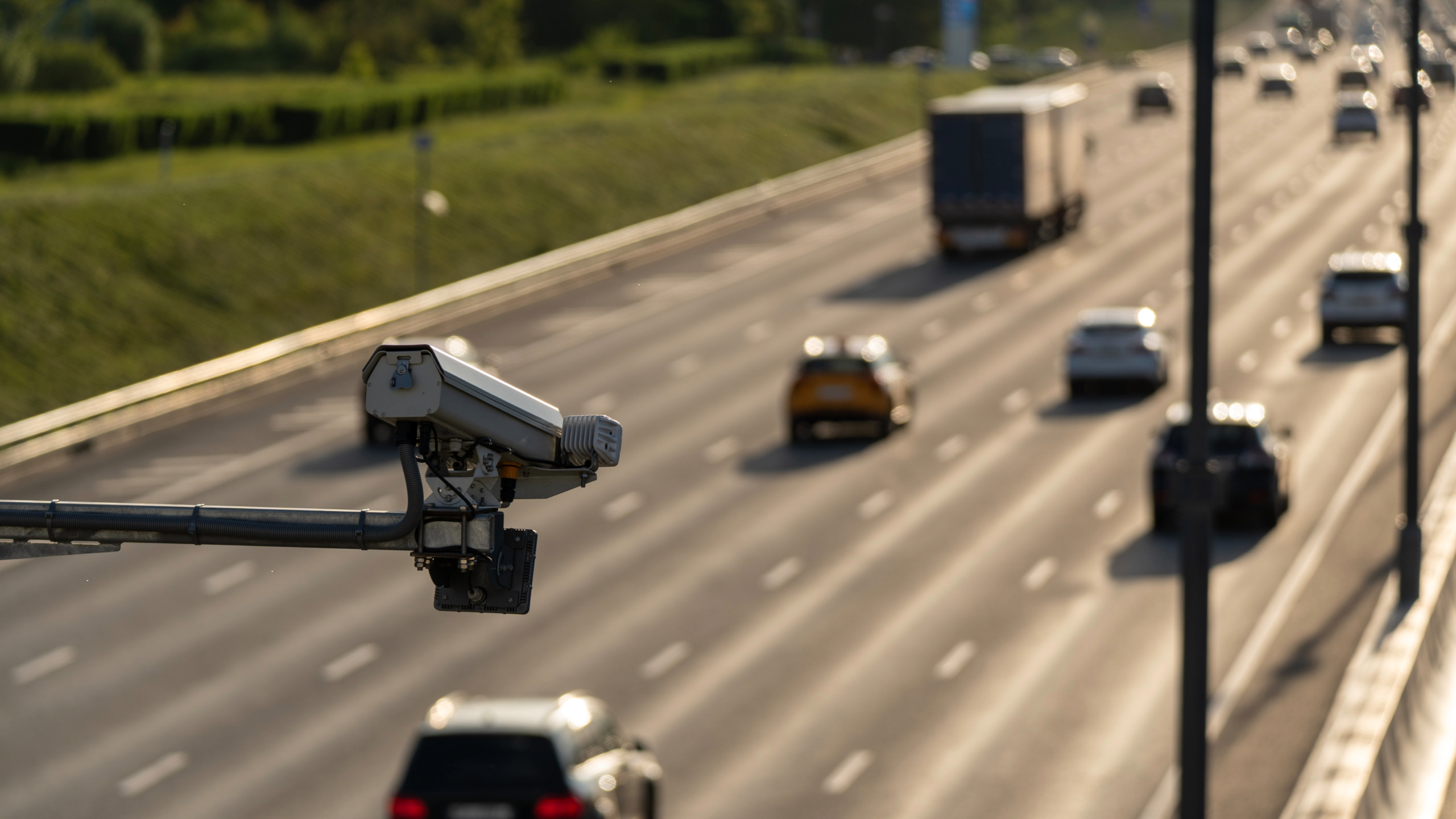
Morris County Police policies give 11 reasons to flag a plate for the county’s automated license plate readers. One covers people who aren’t suspected of a crime.
MORRISTOWN, NJ — Police in Morris County are allowed to put your license plate on a watch list because your registration expired.
That’s one of 11 reasons listed in the Morris County Prosecutor’s Office policy on automated license plate readers, the cameras that photograph passing cars and turn each plate into a record of where the car was and when. The office released the policy to Morristown Minute through a public records request.
Morristown Minute’s earlier reporting on these cameras covered searches, where an officer types in a plate or a description and asks where a car has been. A watch list runs the other way. Police enter the plate first, and the cameras tell them when the car shows up.
How the list works
Police call it a BOLO list, short for “be on the lookout.” Each camera checks every plate it photographs against the list. When a plate matches, the system can send police an alert right away.
The list is kept current. Under the rules, fixed cameras get an updated list “as frequently as possible, but at least daily.”
Morris County has said it uses these alerts. In its 2024 application for a federal grant, the county listed “real-time dispatch alerts” among recent improvements to its plate reader program and said it was developing “real-time alerts in patrol vehicles.”
What gets a plate on the list
Police need “a legitimate and specific law enforcement reason” to find a vehicle or anyone “reasonably believed to be associated with that vehicle.” The policy then gives 11 examples.
Five are what most drivers would guess:
- People with an outstanding arrest warrant
- Missing people
- AMBER and Silver alerts
- Stolen vehicles
- Vehicles believed to be involved in a crime or a disorderly persons offense, New Jersey’s rough equivalent of a misdemeanor
The other six are broader:
- Vehicles or people tied to “prior suspicious activity,” such as “groups of vehicles travelling together suspected of criminal activity”
- Vehicles registered to, or believed to be driven by, someone with no valid license or a suspended or revoked one
- Vehicles “with expired registrations or other Title 39 violations”
- People under a restraining order, a curfew or “any other duly issued order restricting their movements”
- People “who are of interest in a specific investigation, whether or not such persons are themselves suspected of criminal activity”
- People on “any watch list” issued by a state or federal homeland security agency
Title 39 is the part of New Jersey law that covers motor vehicles and traffic, from registration to speeding.
The 11 reasons are examples. The policy says legitimate reasons “include, but are not limited to” them.
The list applies well beyond the prosecutor’s office. It comes from Attorney General Directive 2022-12, which sets the rules for plate readers at every police department in New Jersey. The prosecutor’s office copied it into its own policy. The same language appears in the Morris County Sheriff’s Office policy and in more than 30 local police policies the prosecutor’s office released.
Where the plates come from
An officer can add a single plate. Police can also load plates in bulk from other databases. The policy names four: the FBI’s National Crime Information Center, the National Insurance Crime Bureau, the U.S. Department of Homeland Security and the New Jersey Motor Vehicle Commission.
The Motor Vehicle Commission is the agency that knows whose registration has lapsed and whose license is suspended. The policy says police may load its records. It doesn’t say whether Morris County does.
Coming off the list depends on the person who added the plate. The prosecutor’s policy makes that person responsible for removing it when the alert goes stale or no longer applies. It sets no deadline.
The statewide network does have a clock. Officers can flag a person or vehicle as a “point of interest,” and the state system sends that flag to every certified camera network in New Jersey. It then texts or emails the investigator when a camera spots the plate. According to the Sheriff’s Office policy, the officer has to name a supervisor, who gets a copy. A flag on a stolen vehicle expires after 48 hours. Any other flag expires within 30 days unless the officer picks a different date, and it can be extended.
What happens when a camera sees the plate
The officer who gets the alert is told why the plate is on the list. Whoever entered it has to include instructions, such as “Stop and Hold” or “Contact.”
Some alerts tell the officer to stay back. On a “non-encounter alert,” the officer notifies the agency that listed the plate without stopping the car “or otherwise revealing to the occupant(s)” that it has been found.
An alert alone doesn’t always justify a traffic stop. The policy tells officers to make “a reasonable effort to confirm that a wanted person is actually in the vehicle” first. It cites a 1996 New Jersey appeals court ruling, State v. Parks. As the policy describes that ruling, a suspended license on the owner’s record isn’t enough to pull a car over unless the driver generally matches the owner’s description, such as age and gender.
Each alert also becomes a stored record, kept for three years. Those records come with looser rules than the rest. Police can search ordinary plate records for only three reasons. Alert records can be used in an active investigation “or for any other legitimate law enforcement purpose.”
What the records don’t show
The policies say what police are allowed to do. Nothing released so far shows how many plates are on Morris County’s lists, which of the 11 reasons police use most, or how many alerts the cameras send.
The check on all of this is the yearly self-audit that also covers searches. Each department reviews a random sample of its own plate reader activity, watch list entries included, and reports the result to the state. The prosecutor’s office reported zero violations and zero citizen complaints for 2023, 2024 and 2025.
None of the policies released to Morristown Minute includes a step for telling a driver that a plate is on a list.
Morris County has at least 279 plate readers. The State Police said in their 2025 annual report that approved users “can receive BOLO alerts” from plate readers across New Jersey, a network the report put at 5,500 cameras.
So a lapsed registration is enough, under the rules, to put a plate on the list. After that, every camera the car passes can tell police where it is.