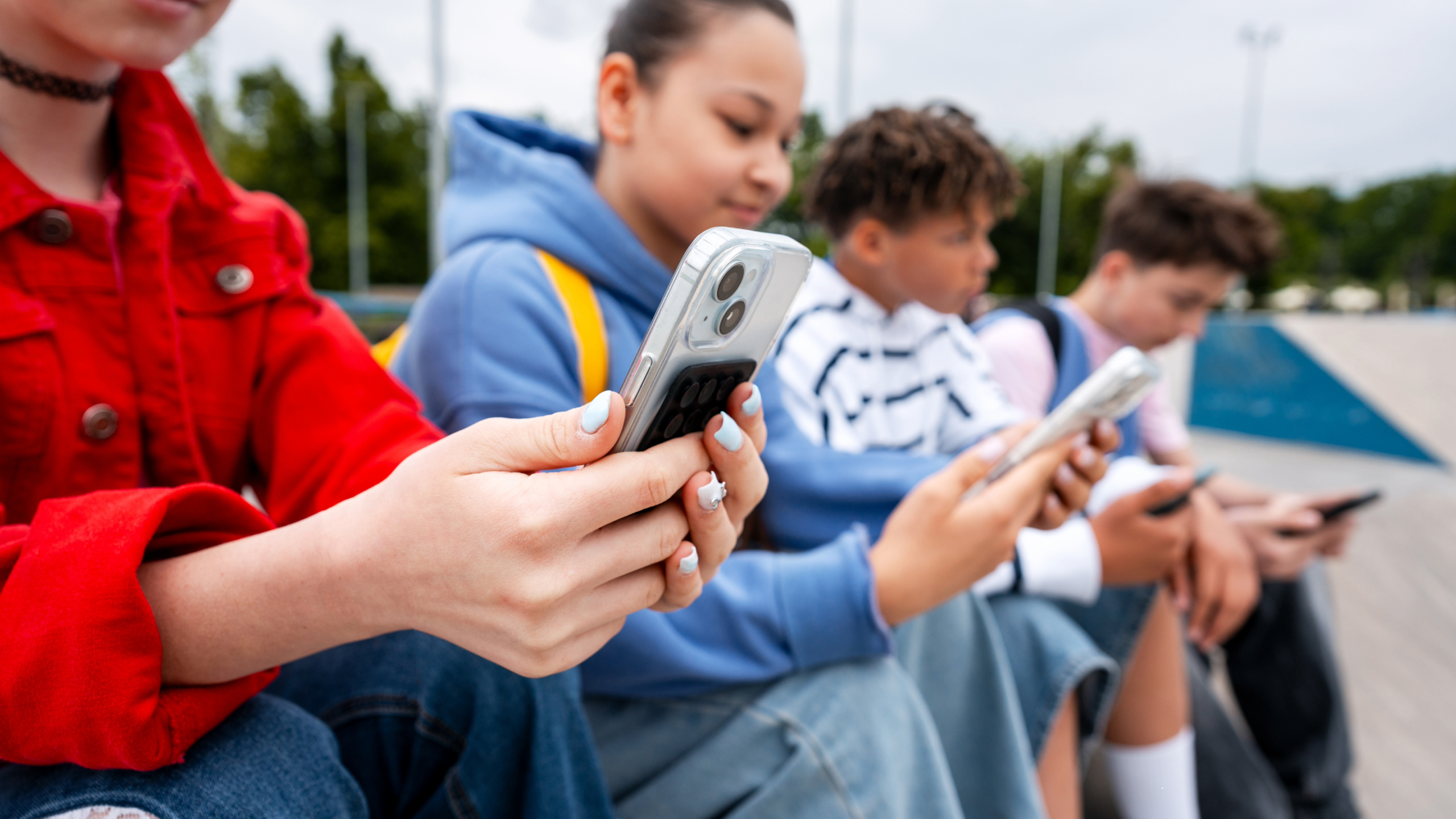
Support spans political parties, while the law requires accommodations for health needs, disabilities and other specified uses.
NEW JERSEY – 83% of New Jersey adults support restrictions on nonacademic cellphone use throughout the public school day, according to a Rutgers-Eagleton Poll released Oct. 12.
The poll found 59% strongly support the requirement and 24% somewhat support it. Thirteen percent oppose it, and 4% are uncertain.
The results come during the first school year covered by S3695, enacted as P.L. 2025, c. 195, which was approved Jan. 8, 2026. The law requires public school governing boards to adopt policies consistent with state guidelines on student use of internet-enabled devices.
Support and the limits of the survey
Support reached 87% among Republicans, 85% among Democrats and 79% among independents. Rutgers reported no statistically significant partisan difference.
Age produced a wider gap: 94% of adults 65 and older supported the requirement, compared with 72% of adults ages 18–34.
The poll’s questionnaire and methodology describe a statewide survey of 1,004 adults, conducted Sept. 24–27, with an adjusted overall margin of error of plus or minus 4.1 percentage points. Margins are larger for demographic subgroups.
The survey measures adult opinion about the requirement. Its findings do not establish whether restrictions have improved students’ academic performance or well-being, and it does not represent a survey of K–12 students.
What schools must provide
The Department of Education’s guidance requires public school boards to implement policies covering the entire school day beginning in 2026–27. Schools determine their storage arrangements, which may include locked pouches, lockers, bins or other methods.
The requirement covers public school districts, charter schools and renaissance school projects. State guidance permits boards to adopt more stringent policies, within the law’s requirements.
The law defines internet-enabled devices to include smartphones, tablets and smartwatches. It excludes school-provided devices used for educational purposes.
It also requires guidelines to accommodate students’ individualized education programs, Section 504 plans and health plans. Authorized uses include prescribed medical care, translation services, certain necessary purposes approved by school administrators and case-by-case arrangements for students who routinely care for family members.
School policies must address cellphone use during emergencies or perceived threats of danger. The law also preserves reasonable accommodations for educational use.
For families, the rules governing storage, approved access and communication during the school day are set out in their school’s adopted policy, under the state requirements.