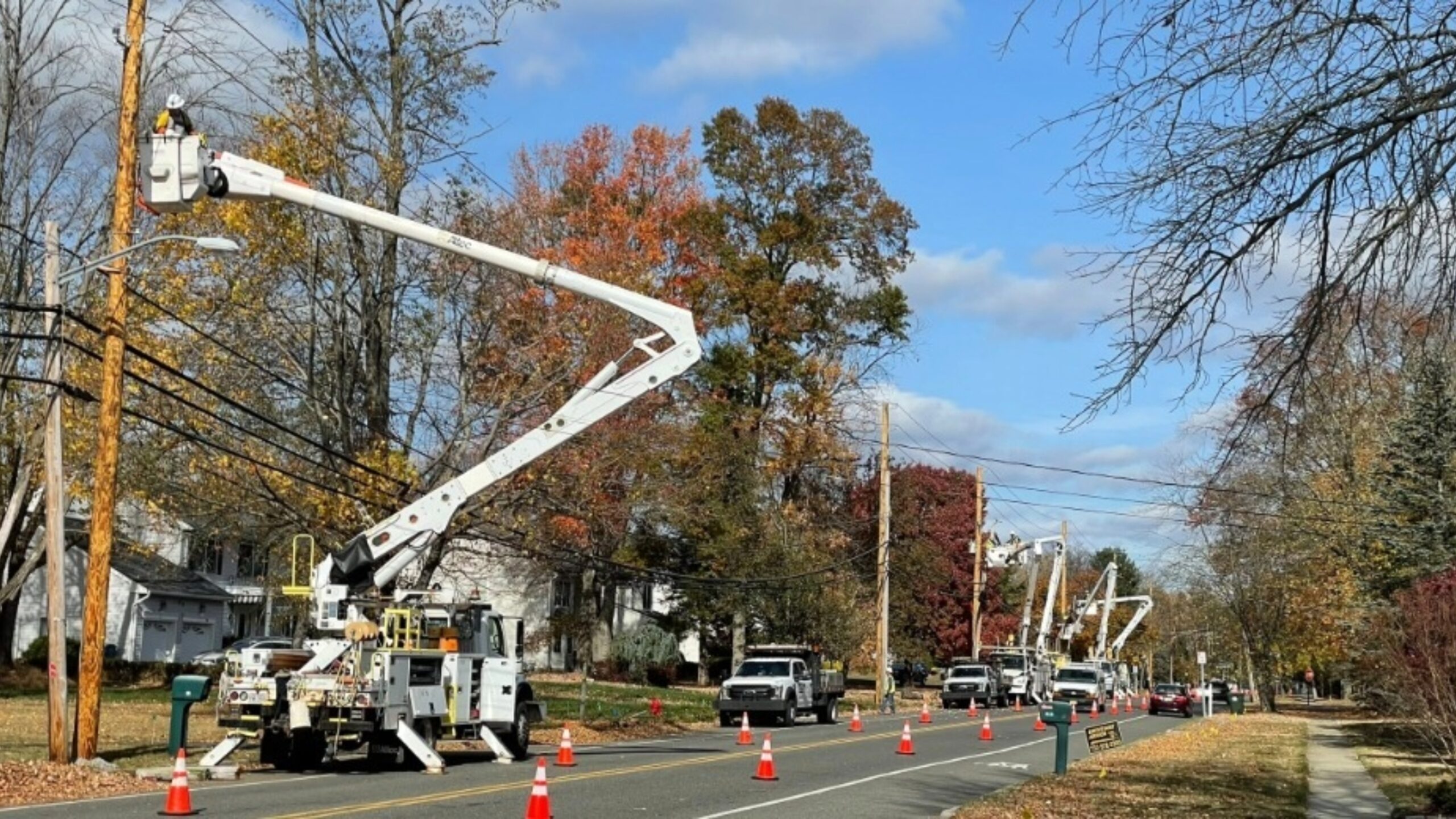
Residents in Morristown and across Morris County were largely restored by late March, but the March 16–17 storm renewed a familiar question: why do outages from a common wind event still stretch into days, and what real accountability exists when they do?
MORRISTOWN, NJ – Days after strong winds swept through North Jersey on March 16 and 17, 2026, some Morristown-area residents were still without electricity, reviving a recurring frustration in Morris County: outages caused by downed trees and wires often outlast the storm itself. Local coverage documented both the scale of the disruption and the backlash from residents who said restoration was too slow, while regional reporting showed the storm knocked out power for more than 21,000 New Jersey customers statewide.
In Morristown alone, 123 JCP&L customers were without power as of lunchtime on March 17, according to Morristown Green, which also reported outages in neighboring Morris Township and Morris Plains. TAPinto reported that Morristown had 155 of 11,056 customers affected early in the aftermath, and that hundreds of homes in the wider Morristown area were still out after the overnight wind storm.
The immediate reason for the delays appears straightforward. High winds brought down trees, limbs, and utility lines across the region, creating the kind of restoration job utilities describe as labor-intensive and sequential. Damaged lines have to be located, circuits assessed, hazards secured, debris cleared, and repairs completed before service can be fully restored. FirstEnergy, JCP&L’s parent company, says weather-related outages can take days when damage is extensive, and it points to vegetation, damaged equipment, and outside interference among common outage causes.
That explanation, however, does not fully answer the question many residents ask after each storm: why does this keep happening in suburban communities where tree-related outages are so predictable? FirstEnergy’s own materials say off-corridor trees, meaning trees outside the utility’s maintained right-of-way, are often responsible for storm damage to lines. The company also says it is typically limited in trimming some of those trees, even when they pose a risk, a reality that leaves many outages at the intersection of weather, vegetation management, property boundaries, and the age and layout of local distribution lines.
Responsibility for restoration rests first with Jersey Central Power & Light, which serves Morristown and much of Morris County and publishes the outage information residents rely on during storms. The utility is regulated by the New Jersey Board of Public Utilities, whose reliability rules require quarterly outage reports, annual system performance reports, and, after a “major event,” a report detailing damage, response timelines, staffing, and repairs. The BPU also maintains a consumer complaint process for utility customers who believe service problems were mishandled.
As of March 24, I did not find a public BPU order, fine, or formal enforcement action tied specifically to this mid-March storm response. That does not mean residents lack recourse. The BPU’s Division of Customer Assistance accepts utility complaints online and by phone at (800) 624-0241, and the agency says it reviews online complaints daily during business hours.
The compensation picture is narrower than many customers may expect. FirstEnergy says it does not reimburse customers for food loss or damaged equipment during weather-related outages, and advises residents to check with renters’ or homeowners’ insurance carriers instead. As for bill relief, the company says customers are not charged for electricity they did not use while service was interrupted, but that is not the same thing as a storm-related credit for lost time, spoiled food, hotel stays, or disrupted work.
That gap between inconvenience and compensation helps explain why these outages remain a quality-of-life issue, not just a weather story. For households that rely on refrigeration for food or medication, work from home, use powered medical devices, or have young children, an outage that lasts one or two days can become expensive and destabilizing even without catastrophic property damage. TAPinto’s reporting reflected that strain directly, documenting residents who were still without power days later and were openly frustrated with the utility response.
JCP&L argues it is already investing in prevention. In February 2026, FirstEnergy said a $95 million New Jersey Reliability Improvement Project had reached its midpoint and that nearly 16,500 customers in parts of Morris and Monmouth counties saw more than an 80% drop in outages in 2025 after targeted upgrades. The company says those improvements include stronger poles and wires, some undergrounding, automatic switching equipment, changes to circuit layout, and increased tree trimming. Separate local reporting from a March 6 Morris Plains council meeting said JCP&L outlined additional upgrades, including smart-grid technology designed to reroute power around some outages.
The state, meanwhile, is also pressing utilities on modernization. On February 4, the BPU issued a request for information to New Jersey’s electric distribution companies, including JCP&L, seeking plans tied to grid modernization, faster interconnection, and lower costs. The agency said the effort comes amid rising electricity demand and affordability pressure across New Jersey and the broader PJM region.
By today, March 24, the immediate crisis had largely passed. Live outage tracking showed Morris County down to a few dozen remaining outages, a small share of the county’s more than 209,000 tracked customers. But the bigger issue remained unresolved.
Morristown-area residents got their lights back. What they still do not have is a clear public answer about whether the next ordinary wind storm will produce the same cycle of downed trees, multi-day restoration, and anger that fades until the next outage map starts filling in again.