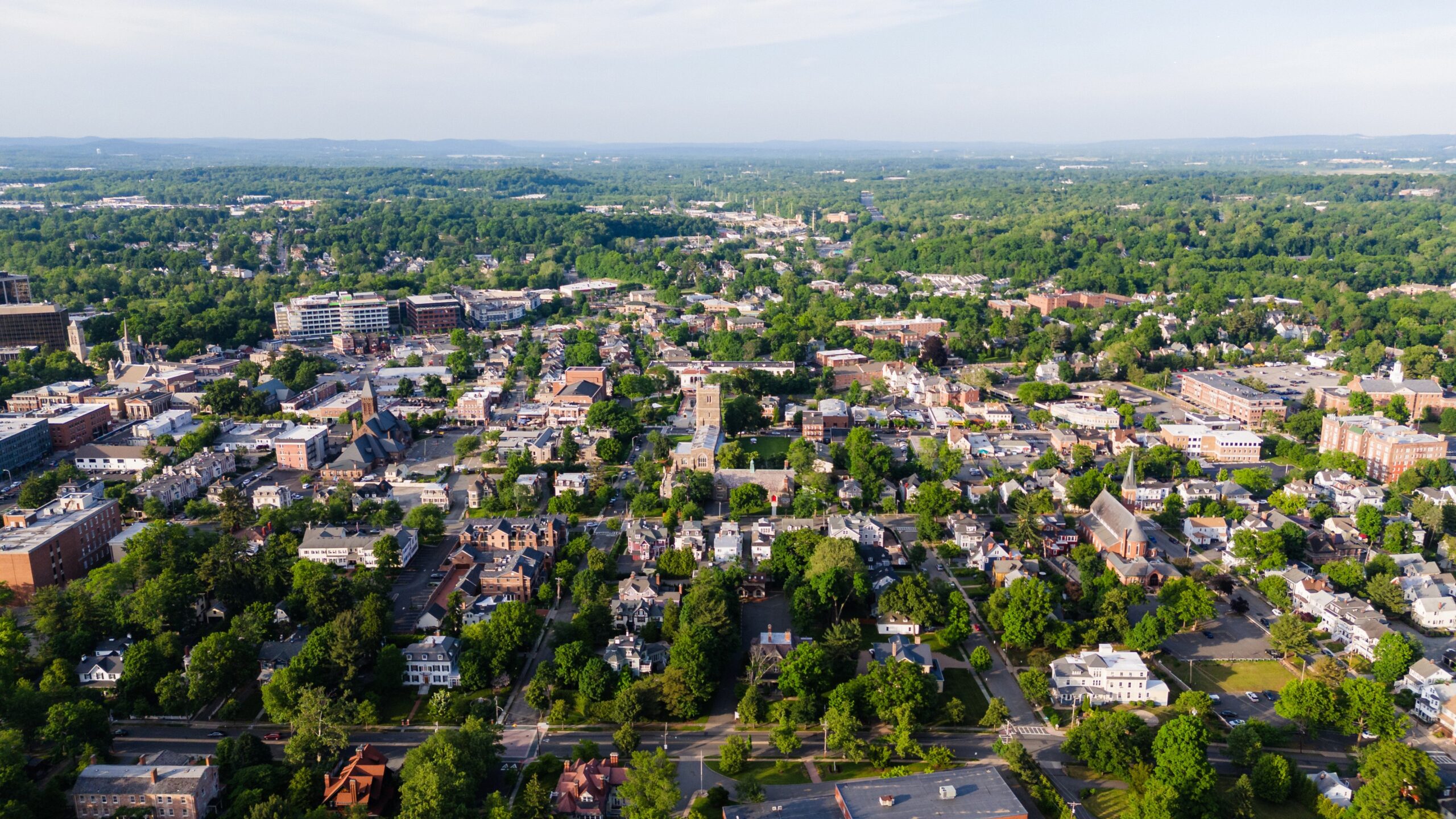
New county and local records show a rising pipeline of housing and redevelopment across Morris County while road closures, utility work, stormwater plans and school facility needs are emerging as the next set of questions for residents and local officials.
MORRISTOWN, NJ – Housing and redevelopment plans now moving through Morris Township, Dover and across Morris County are adding up to a broader local story, one that goes beyond unit counts and zoning maps. Current public records show a countywide surge in proposed multi-family and mixed-use development, while local notices and planning materials point to the less visible questions that follow: traffic, utilities, parking, drainage, stormwater systems and school building capacity.
The clearest countywide signal came Thursday, March 26, when Morris County released its 2025 Development Activity Report. The county said its planning board reviewed 26 applications for multi-family and mixed-use developments totaling 2,028 proposed units in 2025, more than double the 923 units proposed in 2024. The report also said housing affordability remains a significant concern, with median prices for new homes and rents continuing to run high across the county.
That county picture is now showing up in individual municipal files. In Morris Township, officials adopted an amended Mount Kemble Avenue Redevelopment Plan in March. Township affordable-housing ordinance materials show that the amended plan covers 9.2 acres and allows for 139 multifamily or townhouse-style units, including 23 affordable units. The same March materials list several additional affordable-housing sites elsewhere in the township, including projects at 300 Madison Avenue, 100 Southgate Parkway and 291 James Street.
In Dover, planning board exhibits show a much larger proposal at 71 Bassett Highway. The application calls for demolition of an existing commercial building and construction of three mixed-use buildings with 640 residential units and 11,733 square feet of commercial or retail space. The filing states that the project would include affordable housing along with redevelopment of internal roadways, off-street and on-street parking, grading, drainage, utilities, lighting, landscaping, stormwater management and easements for new utility locations.
Taken together, those records show why the local conversation is shifting from whether more housing is coming to whether surrounding systems are prepared for it. The development question is no longer just how many units municipalities can approve. It is also whether road networks, sewer and water connections, parking supply, stormwater infrastructure and public services can keep pace once those approvals turn into construction and occupancy.
Morristown is part of that picture even where the current paperwork is not a housing application. This month, Morris County issued road-closure notices for Schuyler Place tied to the ongoing courthouse project. In its March 20 notice, the county said the closure was needed for excavation, sanitary connections and preparation for a water service connection for the new courthouse facility. Access to nearby parking garages was to be maintained, but motorists were told to plan alternate routes. That is a reminder that even one public construction project can quickly turn infrastructure into a daily-life issue for downtown drivers, businesses and residents.
The school side of the equation is developing on a separate but overlapping track. The Morris School District is moving toward a fall 2026 bond referendum and says proposed projects would address building needs and program support. On its referendum page, the district says state aid is available when districts use bond funding for facility improvements, and it lists major building needs such as HVAC and communications systems upgrades among the work under discussion. The district also said administrators hosted a “State of Our Facilities” presentation on March 9 covering needs across its 10 schools.
That does not mean current development proposals are the sole driver of school capital planning. The district’s public materials frame the referendum around long-standing building and instructional needs. But for residents in Morristown and Morris Township, the timing means two conversations are likely to overlap in the months ahead: how much growth the area is preparing for, and how much investment existing public systems already require.
The county’s own data suggests that this is not a short-term spike limited to one town. Along with the rise in proposed multi-family and mixed-use units, the county reported 235 building-related applications in 2025 and said Parsippany-Troy Hills, Randolph Township and Hanover Township led the county in submissions. That does not place all of the pressure on Morristown-area municipalities, but it does show that redevelopment and housing expansion are part of a wider county trend rather than isolated local debates.
For Morristown Minute readers, the most useful question may be the simplest one: what is being promised alongside the housing. In Dover, the answer is visible directly in the application language, which pairs housing with road, parking, drainage, utility and stormwater work. In Morris Township, the affordable-housing and redevelopment ordinances show that multiple sites are being positioned for new residential yield at once. In Morristown, current county construction notices show how infrastructure work can affect traffic patterns and access even before a housing project enters the frame.
What happens next will play out in planning board hearings, ordinance votes, district presentations and county project updates. For now, the public record points to a clear pattern: housing growth is moving forward, and the real local test is whether the roads, utilities, parking systems, drainage networks and public buildings around it are moving with it.