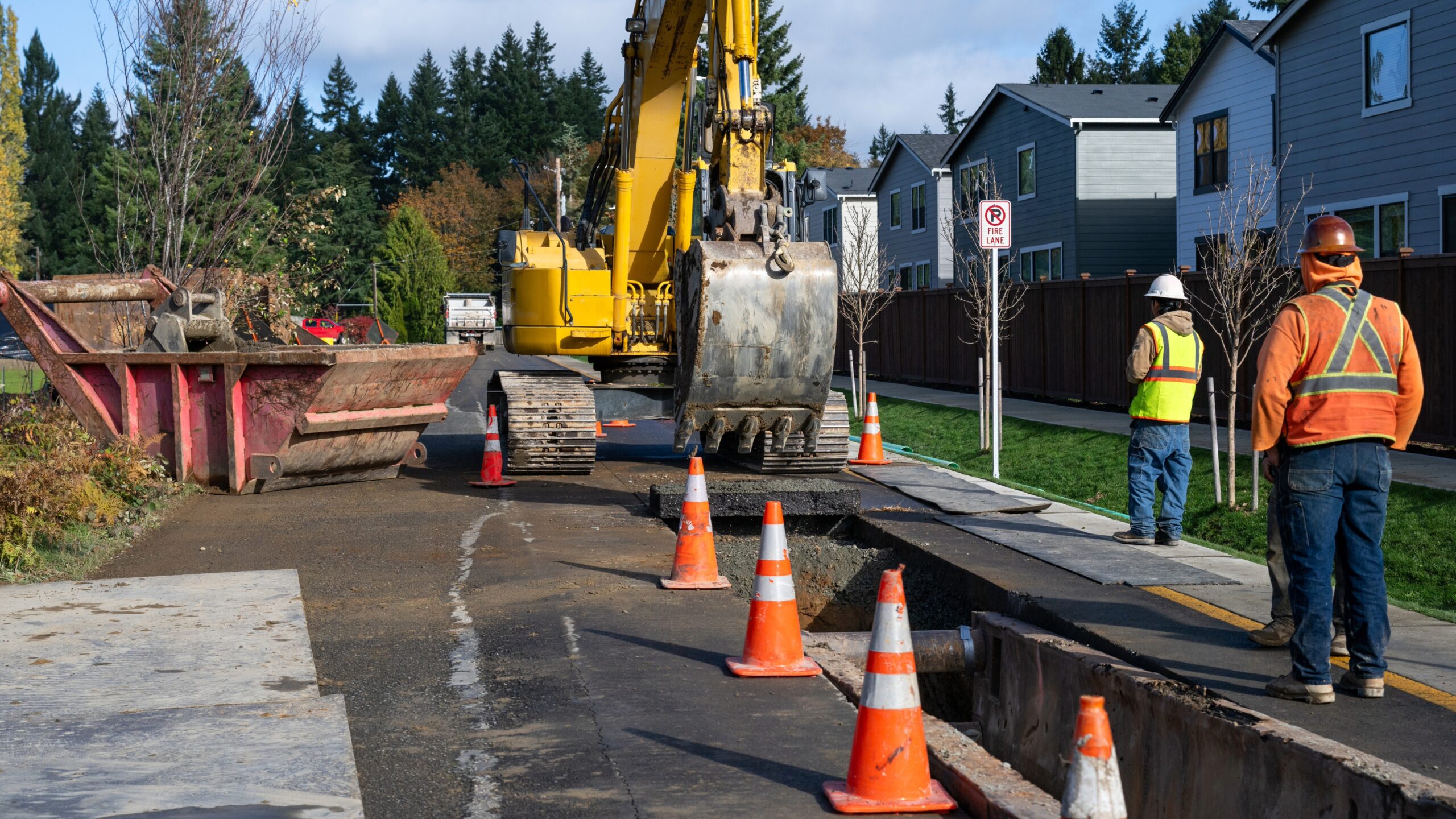
Several Morris County municipalities are spending on treatment equipment, water mains, pump stations and storage systems that most residents never see directly, even as those projects shape utility bills, construction schedules and long-term public health compliance.
MORRIS COUNTY, NJ – Madison this week introduced two infrastructure ordinances that help explain a countywide story residents often pay for without following closely. On March 23, 2026, the borough introduced one ordinance appropriating $1.5 million from its Water Capital Improvement Fund to design and install PFAS “forever chemical” treatment equipment, and a second appropriating $100,000 from its General Capital Improvement Fund for engineering, design and permitting tied to the Glenwild Road and Green Village Road sanitary sewer replacement upgrade.
Madison’s two ordinances show the kind of public-works spending now appearing in several Morris County municipalities. Towns are not only dealing with new housing, but also with aging pipes, pump stations, storage tanks, treatment requirements, road coordination, and state environmental rules that can force expensive work before a resident ever sees a dramatic break or failure. These decisions can affect rates, capital borrowing and street-level disruption long before they become a regular part of public discussion.
The PFAS side of the story is one of the clearest examples. New Jersey has established drinking-water standards for key PFAS compounds, including PFOA, PFOS and PFNA, and the state says public community and public non-transient noncommunity water systems are required to routinely monitor for contaminants with established maximum contaminant levels. That is part of why treatment projects that might once have looked optional now read more like compliance work.
Madison’s borough government has been signaling PFAS cost concerns for months. In a September 2025 resolution opposing a proposed statewide PFAS settlement structure, the borough said treatment and remediation costs to water and wastewater utilities can be substantial and warned that unrecovered costs would fall on ratepayers, taxpayers, residents and businesses. That makes the new $1.5 million ordinance more than a single budget item. It is part of a larger financial question now facing local systems across New Jersey.
The sewer side of the story is just as important, and often even less visible. Madison’s $100,000 sewer ordinance is not for construction itself. It is for the planning phase: engineering, design and permitting for a sanitary sewer replacement on Glenwild Road and Green Village Road. That is how many of these projects begin. By the time roads are opened or contracts are awarded, towns may already be months into technical and regulatory work.
Other Morris County municipalities are dealing with similar systems work in different forms. In Parsippany-Troy Hills, the Township Council scheduled an April 7, 2026 public hearing on a proposed public-private partnership with Utility Service Group Water Solutions, LLC for a full-service water storage tank asset rehabilitation, management and maintenance program. That is a different model from Madison’s ordinance approach, but it points to the same countywide issue: storage, treatment and distribution systems need work, and towns are weighing whether to fund and manage that work directly or through longer-term outside arrangements.
In Randolph, current municipal records show multiple utility projects moving at once. Council minutes from February 2026 say staff installed 750 linear feet of water main and service stubs on Morris Turnpike ahead of repaving funded with an NJDOT grant. Separate Randolph records say the Den Brook Pump Station needed emergent repairs and equipment replacement, while the Dogwood Pump Station project includes pump and control replacement, a natural-gas generator, and drainage and building improvements. The township’s 2025 annual report, published in March 2026, says the Morris Turnpike water main extension created a looped system that improved water pressure and fire protection while saving $150,000.
The examples span several kinds of infrastructure spending that can end up inside the same monthly bill or municipal budget. A town may be paying for water-quality treatment, sewer planning, emergency pump work, tank rehabilitation, or line replacement at the same time. Some costs sit inside utility funds. Some are financed through capital ordinances or bonding. Some may be paired with grants. Some may be shifted into public-private contracts. And some eventually show up in rate adjustments. Morris Township, for example, is currently telling residents that annual sewer service fees were increased after operating costs rose over the last five years, citing electricity, sludge disposal, insurance, salaries and benefits.
New Jersey’s financing structure helps explain how towns manage the price tag. The New Jersey Water Bank, run through the New Jersey Infrastructure Bank and NJDEP, offers low-cost financing for drinking-water and wastewater projects. The program says it has saved ratepayers and taxpayers more than $2.58 billion, and it exists specifically to help local governments fund infrastructure work that is too expensive to absorb at once through annual budgets alone. That does not make projects cheap. It changes how they are paid for, often spreading costs over time through borrowing or subsidized financing rather than immediate one-year budget hits.
County and state planning rules also shape when projects move. Morris County’s Wastewater Management Plan page shows that wastewater planning is not just a municipal maintenance issue. It sits inside a wider framework of county instructions, NJDEP rules and amendment procedures. The county planning department also says it reviews municipal stormwater management plans and ordinances under NJDEP stormwater rules. In practice, sewer, drainage and stormwater work can be driven by regulation and long-range planning as much as by visible failures on the ground.
Development can add pressure to these systems, but it is only one part of the story. Madison’s two ordinances put two sides of that system into view at once: drinking-water treatment and sewer replacement planning. One addresses the chemistry of drinking water. The other addresses the physical condition of a sewer system. Together they show how routine local actions can shape costs, construction and compliance long before most residents focus on them.
What happens next in Madison is straightforward. The PFAS and sewer ordinances were introduced at the borough’s March 23 council meeting and posted as pending ordinances on March 24. In other towns, the next steps vary by project: public hearings, design contracts, financing applications, bid awards, emergency repairs, and eventually construction schedules that residents are far more likely to notice.
For that reason, this is a countywide beat worth watching. The projects are technical and easy to overlook, but the effects are local and constant: water quality, sewer reliability, pressure and fire protection, road openings, and the bills that help pay for all of it.