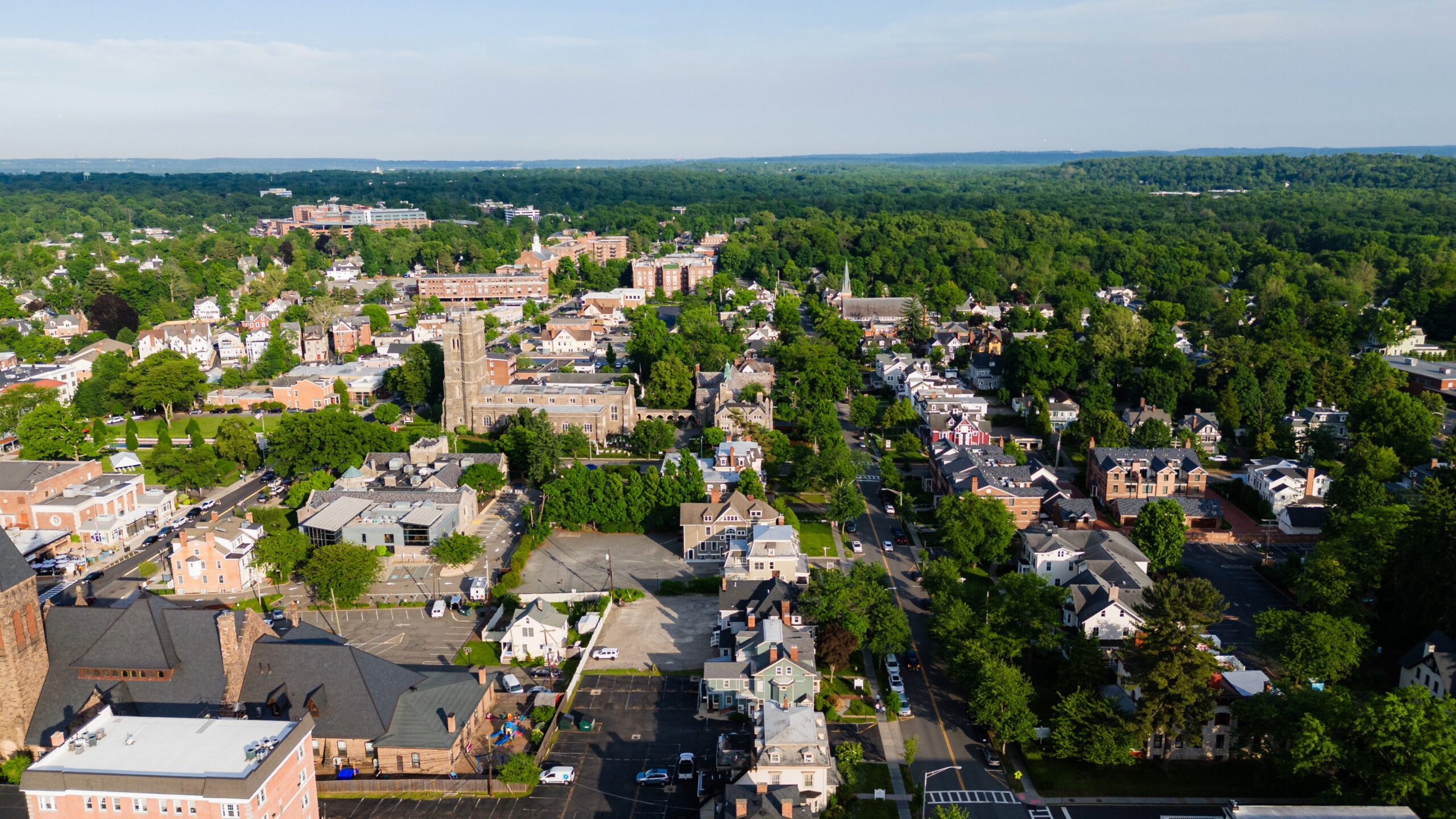
With a median household income of $121,340, locals can comfortably afford roughly $3,000 per month in housing, yet average rents now hit $2,750–$3,200 and median home prices stand between $721,000 and $862,000.
MORRISTOWN, NJ – Morristown’s housing market has become structurally unaffordable for median-income residents. A household earning the town’s median income of $121,340 can afford about $3,033 per month in housing under the standard 30% guideline, but current asking rents generally run from about $2,750 to $3,200, while home values and sale prices sit far higher than what that income typically supports.
New Census data shows Morristown’s median household income at $121,340 and its per capita income at $73,143 in 2024 dollars. That means the median household brings in about $10,112 a month before taxes, while per-capita income works out to roughly $6,095 a month. By the same 30% standard, a household at the median can reasonably spend about $3,033 a month on housing, while a resident earning around the per-capita figure would be closer to $1,829 a month.
That gap matters because current rents in Morristown now cluster near or above the median household affordability line. Zillow’s rental market tracker put the town’s average rent at about $2,761 in late March 2026, including about $2,498 for a studio, $2,407 for a one-bedroom, and $3,015 for a two-bedroom. Trulia and Apartments.com show a similar range, with overall averages around $2,750 and two-bedrooms near or above $3,000.
Measured against median household income, that places many rentals at roughly 27% to 32% of gross monthly income before utilities, parking, renter’s insurance, commuting, or other housing-related costs are added. For residents closer to Morristown’s per-capita income level, even many one-bedroom units exceed the traditional affordability threshold.
The ownership market is even farther out of reach. Redfin reported Morristown’s median sale price at about $721,250 in February 2026, while Zillow’s home value index placed the average home value at about $862,203 as of Feb. 28. Those figures are well above the price range a household earning the townwide median income would typically qualify for at current borrowing costs.
Mortgage rates have also moved against buyers. Freddie Mac reported the average 30-year fixed mortgage rate at 6.38% for the week ending March 26, 2026. At the same time, New Jersey continues to have the highest effective property-tax rate in the country at 2.23% on owner-occupied housing, according to the Tax Foundation’s latest state-by-state data.
Morristown’s own Census figures show a median monthly owner cost with a mortgage of $2,984 and a median monthly owner cost without a mortgage of $1,424 – but that reflects the existing stock of homeowners, many of whom bought before the latest surge in home values and interest rates. It does not mean a median-income household can now buy a typical home in town at current market conditions.
The affordability picture is further complicated by the difference between median household income and how housing is actually paid for. A median household is not automatically a dual-income household, and many renters and buyers are shopping with a single paycheck, variable earnings, student debt, child care costs, or little savings for a down payment. In practice, that means even housing that appears barely affordable on paper can still be out of reach.
Morristown has added apartments in recent years, particularly near the train station and in redevelopment corridors, but the current market still reflects prices aimed largely at higher earners. For median-income households, renting may remain barely manageable in some cases. Buying a typical home in town is another matter entirely.
Unless prices, borrowing costs, or housing supply shift more dramatically, the mismatch between what Morristown residents earn and what Morristown housing costs is likely to remain one of the town’s central economic pressures in 2026.