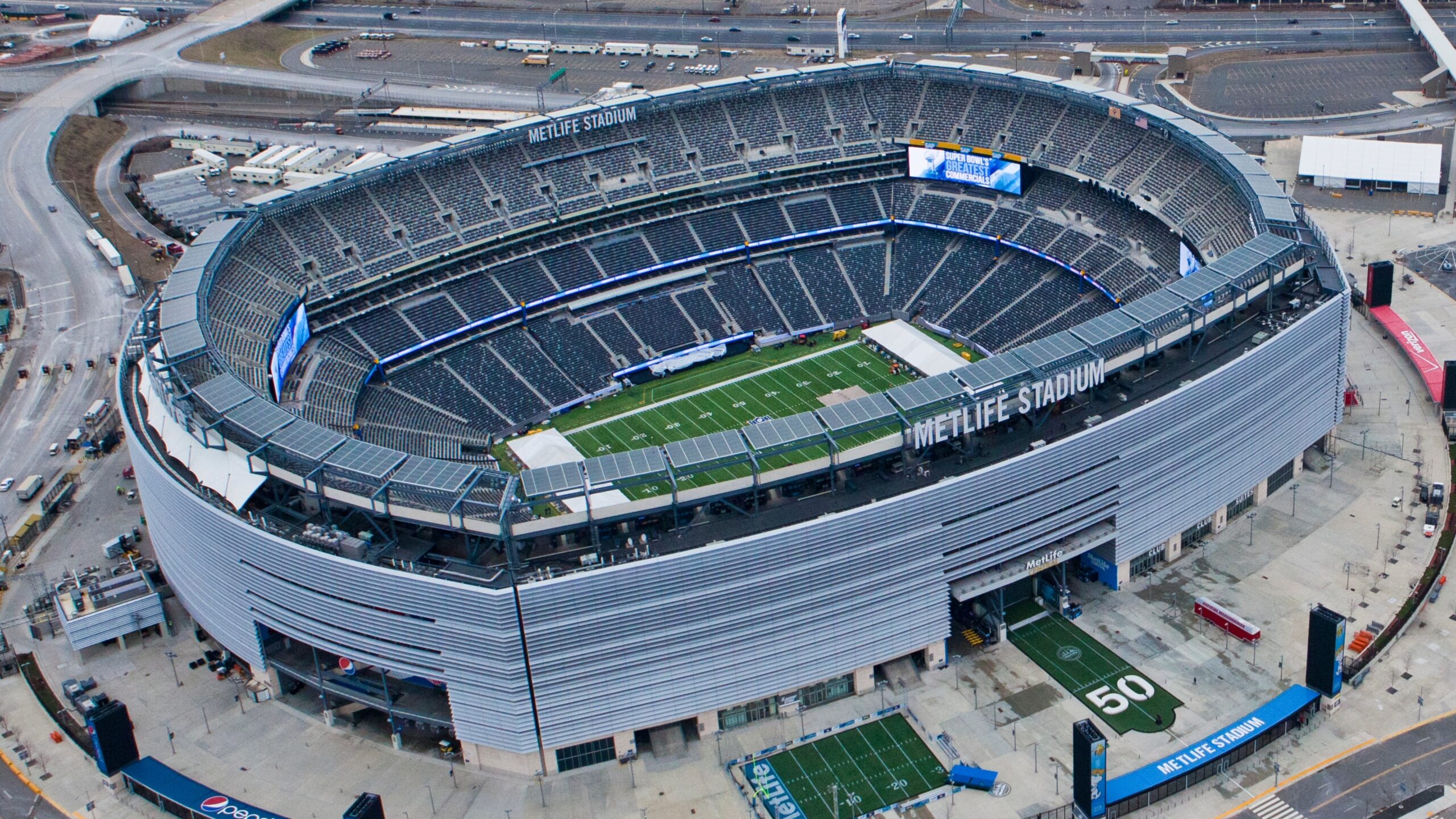
The interagency report says operations met service targets across eight matches but recommends that future plans not assume the 40,000 riders per match built into the original mobility plan.
EAST RUTHERFORD, N.J. New Jersey’s post-World Cup transportation review says trains and buses carried 370,358 passenger movements during eight matches at the Meadowlands, while recommending that future event plans adopt a substantially lower transit commitment.
The after-action report, released July 22, counts 183,532 inbound and 186,826 outbound passenger movements over 39 days. Those figures represent trips, not 370,358 individual people.
The original mobility plan established capacity for as many as 40,000 transit passengers in each direction per match. Actual inbound counts ranged from 20,114 to 25,797, while outbound counts ranged from 20,857 to 26,221.
The report says all post-match crowds were cleared in approximately 60 to 70 minutes, compared with a planning allowance of 120 minutes. It credits advance staffing, supplemental buses, pre-positioned maintenance crews and coordination among NJ Transit, law-enforcement agencies and event organizers.
Operations were not trouble-free. The system faced extreme heat, severe weather, switch and signal failures, heat-related rail buckling and overhead-wire incidents. The report says contingency buses and standby crews prevented those disruptions from escalating into larger service failures.
For future events, the report recommends that NJ Transit avoid commitments exceeding 20,000 passengers within a two-hour period. That recommendation is close to, and in several cases below, the ridership the system actually handled during the tournament. The report does not fully reconcile that apparent tension, leaving future planners to determine whether 20,000 should be treated as a firm limit or a conservative planning baseline.
The review also acknowledges the Meadowlands’ physical constraints. The stadium and American Dream complex have approximately 28,000 parking spaces, and the report concludes that automobiles are likely to remain the primary mode of access. The rail link can move a meaningful share of a stadium crowd, but it does not function like a high-frequency urban subway line.
One major question remains outside the report: cost. The document is an operational review, not a final financial accounting. It does not reconcile the previously reported $48 million transportation plan with ticket revenue, advertising support, reimbursements or final expenses.
NJ Transit ultimately charged $98 for the special round-trip rail and bus ticket after reducing an earlier proposed fare. A final accounting is needed before the tournament can be evaluated as a financial success or loss for the agency and its riders.
The operational results show that the system moved crowds below its original maximum commitment and generally cleared them faster than planned. The lower recommendation for future events suggests that officials do not consider the original 40,000-passenger commitment an appropriate repeatable standard.